A retaining wall in the Chicago area typically costs between $3,200 and $9,200, with a national average near $6,060, according to cost data from Angi and HomeAdvisor. Priced by the wall face, most installed retaining walls run $35 to $65 per square foot as a blended all-in figure (HomeGuide); common segmental block materials alone sit lower, at $15 to $45 per square foot, with labor, base, and drainage making up the difference, or roughly $40 to $360 per linear foot for a wall between 2 and 6 feet tall (Angi and HomeAdvisor). Where your project lands in that range depends on the material, the height, the drainage system behind the wall, and the soil and grade of your site.
That is a wide spread, and it exists for good reasons. A short timber border wall and an engineered segmental retaining wall holding back a sloped ravine lot are two very different structures. Below is a plain-English breakdown of what actually moves the number, using published 2026 ranges from Angi, HomeAdvisor, HomeGuide, Forbes Home, and Fixr, plus the local factors that matter most for homes in Skokie, Chicago, and across the North Shore.
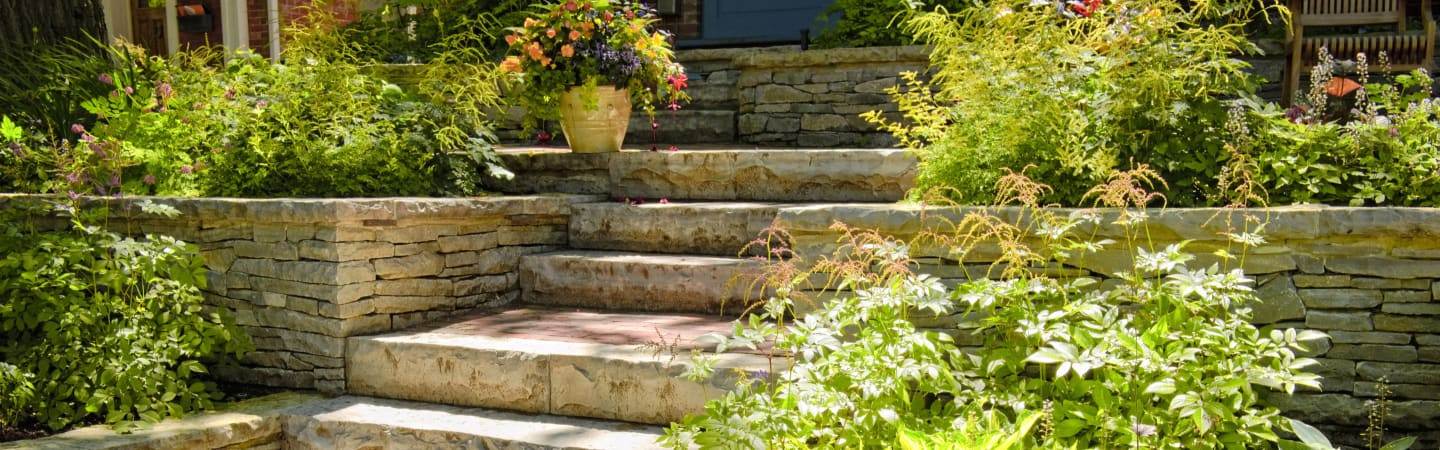
Retaining Wall Cost by Material
Material is the single biggest driver of price. Each option carries a different cost per square foot of wall face, a different working lifespan, and a different look. The installed ranges below reflect published 2026 figures from HomeGuide, Forbes Home, and Angi. They are ballpark market ranges, not a quote for your specific yard.
| Material | Installed cost (per sq ft of wall face) | Typical lifespan | Source |
|---|---|---|---|
| Timber / wood | $10 to $15 | 10 to 20 years | HomeGuide |
| Cinder block | $10 to $12 | Varies with finish | HomeGuide |
| Segmental / interlocking concrete block (SRW) | $15 to $45 | 50 to 100 years | HomeGuide |
| Poured concrete | $16 to $50 | 50+ years | HomeGuide |
| Natural stone | $20 to $95+ | Decades to a lifetime | HomeGuide |
| Boulder | $25 to $50 | Decades | Forbes Home |
| Gabion (wire cage and rock) | $14 to $35 | Decades | Forbes Home |
Installed Cost per Linear Foot at 4 Feet Tall
Because walls are usually quoted by the linear foot at a given height, here is the same cited data expressed the way most contractors quote it, computed from the per-square-foot ranges above for a 4-foot wall:
| Material | Installed cost per linear foot (4 ft wall) |
|---|---|
| Timber | $48 to $80 |
| Cinder block | $40 to $48 |
| Segmental block (SRW) | $60 to $180 |
| Gabion | $56 to $140 |
| Poured concrete | $64 to $200 |
| Natural stone | $80 to $380 |
Segmental retaining wall (SRW) block
Interlocking concrete block is the workhorse of residential retaining walls, and for most homeowners it is the best balance of cost and longevity. HomeGuide puts installed segmental block at roughly $15 to $45 per square foot, with a 50 to 100 year lifespan. A dry-stacked block wall relies on the sheer weight of the units to resist the soil pushing against it, which is why engineers call short versions gravity walls. Once a wall runs taller, blocks alone are not enough, and the design adds geogrid, a synthetic mesh layered back into the soil to tie the hillside and the wall together. That geogrid, and the extra excavation it needs, is a real line item as height climbs.
Poured concrete and natural stone
Poured concrete lands around $16 to $50 per square foot installed depending on reinforcement, per HomeGuide. It is strong, low-profile, and well suited to tall or heavily loaded walls, but it needs forming and often steel, which pushes labor up. Natural stone is the premium end, ranging from about $20 to $95 or more per square foot at HomeGuide, because every stone is placed by hand. It rewards that cost with a look that suits many North Shore homes.
Timber, boulder, and gabion
Timber is the cheapest way to build a low wall, at $10 to $15 per square foot (HomeGuide), but it is also the shortest-lived, typically 10 to 20 years before rot and frost heave take a toll. Boulder walls run $25 to $50 per square foot (Forbes Home) and read as natural and rugged, ideal for informal slopes. Gabion walls, wire baskets packed with stone, come in at $14 to $35 per square foot (Forbes Home) and drain freely, which can be an advantage on wet ground.
What Drives the Price: Height, Engineering, and Permits
After material, height is the next lever, and it is not a straight line. Cost per linear foot climbs steeply as a wall gets taller because taller walls hold back exponentially more soil pressure. Angi and HomeAdvisor put a 2-foot wall at roughly $40 to $200 per linear foot, while a wall up to 6 feet can reach about $360 per linear foot.
Height also triggers two cost factors that catch owners off guard: engineering and permits.
- Engineering. Walls 4 feet and taller usually need a structural engineer's design to meet code and stay standing. Engineering fees commonly run $500 to $2,000 or more, and larger or complex projects can run higher, according to published contractor guides. This is general guidance, and the exact threshold is set by your local building department, so confirm it for your municipality.
- Permits. Most cities require a permit for retaining walls over 3 to 4 feet, with permit fees generally $50 to $450 depending on the jurisdiction and wall size. Permit rules vary widely across Chicago-area suburbs, so this is a "check locally" item, not a fixed cost.
These are not fees to resent. An engineered, permitted wall is the version that does not fail. Published cost guides note that a failed retaining wall can cost $10,000 to $50,000 or more to repair or rebuild, which dwarfs the upfront engineering fee.
Why Drainage Behind the Wall Drives Cost, and Prevents Failure
The most important part of a retaining wall is the part you never see. Water is what destroys retaining walls. When soil behind the wall gets saturated, it becomes far heavier and exerts what engineers call hydrostatic pressure, pushing the wall outward until it leans, bows, or topples. A proper drainage system relieves that pressure, and building it correctly is a meaningful share of the price.
Fixr reports that adding a full drainage package, meaning a perforated drain pipe, drainage aggregate (clean gravel backfill), filter fabric, and weep holes, typically adds $10 to $30 per linear foot. Broken into parts, Fixr lists gravel backfill at $2 to $5 per linear foot, the perforated drain pipe at $1 to $3 per linear foot, and filter fabric at $0.50 to $1.50 per linear foot. The package figure runs higher than those materials alone because it includes the excavation and labor to place them. That is money well spent, because it is the difference between a wall that lasts 50 years and one that fails in five.
A quote that comes in far below the others is often a quote with the drainage engineered out of it. If drainage behind the wall is failing on an existing structure, it is closely tied to the broader question of how water moves across your property, which is where yard grading and drainage work comes in alongside the wall itself.
Retaining Wall Costs in Chicago and the North Shore
National averages are a starting point, but a wall in the Chicago area answers to local ground, and local ground here is demanding in three specific ways.
Heavy clay soils
Much of the Chicago region and the North Shore sits on dense clay. Clay holds water rather than letting it drain, so it swells when wet and shrinks when dry. That movement loads a retaining wall hard, which is exactly why the drainage aggregate and pipe behind the wall matter more here than in sandy regions. Skipping them on clay is asking for a leaning wall.
Freeze-thaw and the frost line
Chicago winters drive repeated freeze-thaw cycles, and water trapped in the soil expands as it freezes, heaving whatever sits above it. The frost line, the depth to which the ground reliably freezes, is commonly cited around 42 inches in the Chicago area. A wall's base and footing need to account for that frost depth, and a poorly bedded wall will ratchet out of alignment over a few winters. This is a real reason a correctly built local wall costs more than a bargain job that ignores it.
Sloped and ravine lots
Parts of the North Shore, including sloped and ravine lots common in Glencoe and Highland Park, put retaining walls to genuine structural work rather than decoration. A wall stabilizing a graded slope on a ravine lot is often taller, frequently crosses the 4-foot engineering threshold, and may step across changing grade, all of which raise the cost compared with a flat backyard border. Homes in Skokie, Evanston, and the surrounding North Shore see the full range, from short garden terraces to tall structural walls.
A retaining wall is one piece of a larger outdoor plan, and it often ties into patios, steps, and other hardscaping. Getting the wall right first protects everything built around it.
Repair or Replace? The Decision Economics
If you already have a failing wall, the question is whether to fix it or start over. Repair is often cheaper than a full rebuild, but only up to a point. Published 2026 repair figures from Angi and Fixr give a useful frame:
- Straightening or anchoring a leaning wall with tiebacks or helical anchors averages about $60 to $85 per linear foot (Angi).
- Adding new footings to secure a wall runs roughly $18 to $50 per linear foot (Angi).
- A full rebuild costs about $70 to $125 per linear foot (Fixr).
The rough rule: if the wall is structurally sound but leaning from a single cause such as blocked drainage, targeted repair usually wins. If the wall is old timber that has rotted, or if the same wall has failed repeatedly, the money spent patching it is often better put toward a new segmental or poured concrete wall that will outlive it by decades. A contractor should be willing to walk you through both numbers honestly rather than defaulting to the bigger job. (For a deeper look at hiring, see our page on retaining wall contractors.)
Red Flags of a Lowball Retaining Wall Quote
The cheapest bid is frequently the most expensive one over time, because the savings usually come from leaving out the parts that keep the wall standing. Watch for these warning signs when you compare quotes:
- No drainage in the scope. If a quote does not mention gravel backfill, a drain pipe, or weep holes, the contractor is planning to skip the most important system in the wall.
- No mention of the base or footing. A wall is only as good as what it sits on. If there is no line for excavation and a compacted base, the wall will settle unevenly.
- Silence on height, engineering, and permits. On a wall approaching or above 4 feet, a bid that ignores engineering and permits is ignoring code, and the cost of those steps reappears later.
- No geogrid on a tall block wall. Taller segmental walls need soil reinforcement. A dry-stacked tall wall with no geogrid is a lean waiting to happen.
- A price far below every other bid. When one number is dramatically lower than the rest, the difference is almost always material or a step being left out, not efficiency.
A fair quote should read like a build plan, listing the base, the wall material, the drainage aggregate and pipe, any geogrid, and the finished height. Detail is a good sign.
Frequently Asked Questions
How much does a retaining wall cost per foot?
For a wall between 2 and 6 feet tall, expect roughly $40 to $360 per linear foot, with the number climbing sharply as the wall gets taller, according to Angi and HomeAdvisor. Priced by the wall face instead, most installed walls run $35 to $65 per square foot (HomeGuide). Material, drainage, and site conditions decide where you land.
What is the cheapest retaining wall material?
Timber and cinder block are the lowest upfront cost, at roughly $10 to $15 and $10 to $12 per square foot respectively (HomeGuide). The trade-off is lifespan. Timber typically lasts only 10 to 20 years, while a segmental block wall can last 50 to 100 years, so the cheaper wall is often more expensive over time.
Do retaining walls need drainage?
Yes. Drainage is the single most important factor in whether a wall survives. Water building up behind a wall creates pressure that pushes it out of line. A drainage package of gravel backfill, a perforated pipe, and weep holes typically adds $10 to $30 per linear foot (Fixr), and it is not an area to cut, especially in Chicago-area clay soils.
How tall can a retaining wall be without a permit or engineering?
As general guidance, walls over 3 to 4 feet usually require a permit, and walls 4 feet and taller usually need a structural engineer's design. The exact thresholds are set by your local building department and vary across Chicago-area suburbs, so confirm the rules for your city before you build.
Why do retaining walls fail?
The most common cause is water. When drainage behind the wall is missing or clogged, saturated soil grows heavy and pushes the wall outward until it leans or bows. In this climate, freeze-thaw movement and expansive clay make good drainage and a frost-conscious base even more important. Most failures trace back to a shortcut taken during the original build.
Is it cheaper to repair or replace a retaining wall?
Repair is usually cheaper when the wall is structurally sound and leaning from one fixable cause. Straightening or anchoring averages about $60 to $85 per linear foot (Angi), while a full rebuild runs about $70 to $125 per linear foot (Fixr). When a wall has rotted or failed more than once, replacement is often the better long-term value.
What does a retaining wall cost in Skokie and the North Shore?
Local walls fall within the national ranges above, but Chicago-area conditions push quality builds toward the higher end because of heavy clay, freeze-thaw, and sloped ravine lots in places like Glencoe and Highland Park. The right way to get an accurate number is a site visit, since height, soil, grade, and drainage all factor in.
Planning a Retaining Wall in Skokie or the North Shore?
R & G Almanza Landscape has built retaining walls and hardscapes across Skokie, Chicago, and the North Shore since 1999. Every yard is different, so the honest answer to "what will mine cost" comes from looking at your slope, soil, and drainage in person. Wondering what your project would cost? Contact us to request an estimate, and we will walk you through the material, height, and drainage options that fit your property.
Call R & G Almanza Landscape at (847) 869-8584 to talk through your retaining wall project.
{"@context": "https://schema.org", "@type": "FAQPage", "mainEntity": [{"@type": "Question", "name": "How much does a retaining wall cost per foot?", "acceptedAnswer": {"@type": "Answer", "text": "For a wall between 2 and 6 feet tall, expect roughly $40 to $360 per linear foot, with the number climbing sharply as the wall gets taller, according to Angi and HomeAdvisor. Priced by the wall face instead, most installed walls run $35 to $65 per square foot (HomeGuide). Material, drainage, and site conditions decide where you land."}}, {"@type": "Question", "name": "What is the cheapest retaining wall material?", "acceptedAnswer": {"@type": "Answer", "text": "Timber and cinder block are the lowest upfront cost, at roughly $10 to $15 and $10 to $12 per square foot respectively (HomeGuide). The trade-off is lifespan. Timber typically lasts only 10 to 20 years, while a segmental block wall can last 50 to 100 years, so the cheaper wall is often more expensive over time."}}, {"@type": "Question", "name": "Do retaining walls need drainage?", "acceptedAnswer": {"@type": "Answer", "text": "Yes. Drainage is the single most important factor in whether a wall survives. Water building up behind a wall creates pressure that pushes it out of line. A drainage package of gravel backfill, a perforated pipe, and weep holes typically adds $10 to $30 per linear foot (Fixr), and it is not an area to cut, especially in Chicago-area clay soils."}}, {"@type": "Question", "name": "How tall can a retaining wall be without a permit or engineering?", "acceptedAnswer": {"@type": "Answer", "text": "As general guidance, walls over 3 to 4 feet usually require a permit, and walls 4 feet and taller usually need a structural engineer's design. The exact thresholds are set by your local building department and vary across Chicago-area suburbs, so confirm the rules for your city before you build."}}, {"@type": "Question", "name": "Why do retaining walls fail?", "acceptedAnswer": {"@type": "Answer", "text": "The most common cause is water. When drainage behind the wall is missing or clogged, saturated soil grows heavy and pushes the wall outward until it leans or bows. In this climate, freeze-thaw movement and expansive clay make good drainage and a frost-conscious base even more important. Most failures trace back to a shortcut taken during the original build."}}, {"@type": "Question", "name": "Is it cheaper to repair or replace a retaining wall?", "acceptedAnswer": {"@type": "Answer", "text": "Repair is usually cheaper when the wall is structurally sound and leaning from one fixable cause. Straightening or anchoring averages about $60 to $85 per linear foot (Angi), while a full rebuild runs about $70 to $125 per linear foot (Fixr). When a wall has rotted or failed more than once, replacement is often the better long-term value."}}, {"@type": "Question", "name": "What does a retaining wall cost in Skokie and the North Shore?", "acceptedAnswer": {"@type": "Answer", "text": "Local walls fall within the national ranges above, but Chicago-area conditions push quality builds toward the higher end because of heavy clay, freeze-thaw, and sloped ravine lots in places like Glencoe and Highland Park. The right way to get an accurate number is a site visit, since height, soil, grade, and drainage all factor in. R & G Almanza Landscape has built retaining walls and hardscapes across Skokie, Chicago, and the North Shore since 1999. Every yard is different, so the honest answer to “what will mine cost“ comes from looking at your slope, soil, and drainage in person. Wondering "}}]}