Yes, and the cold itself is rarely the failure mode. ReTurf's winter care guide states that artificial grass is built to handle snow, frost and freezing temperatures, that frost does not damage it, and that the turf is not affected by frost heave — but the ground underneath can shift if the base was not prepared properly. Motz, a synthetic turf infill manufacturer, says the same in practice: the winter jobs are checking drainage, clearing debris and using the right tools.
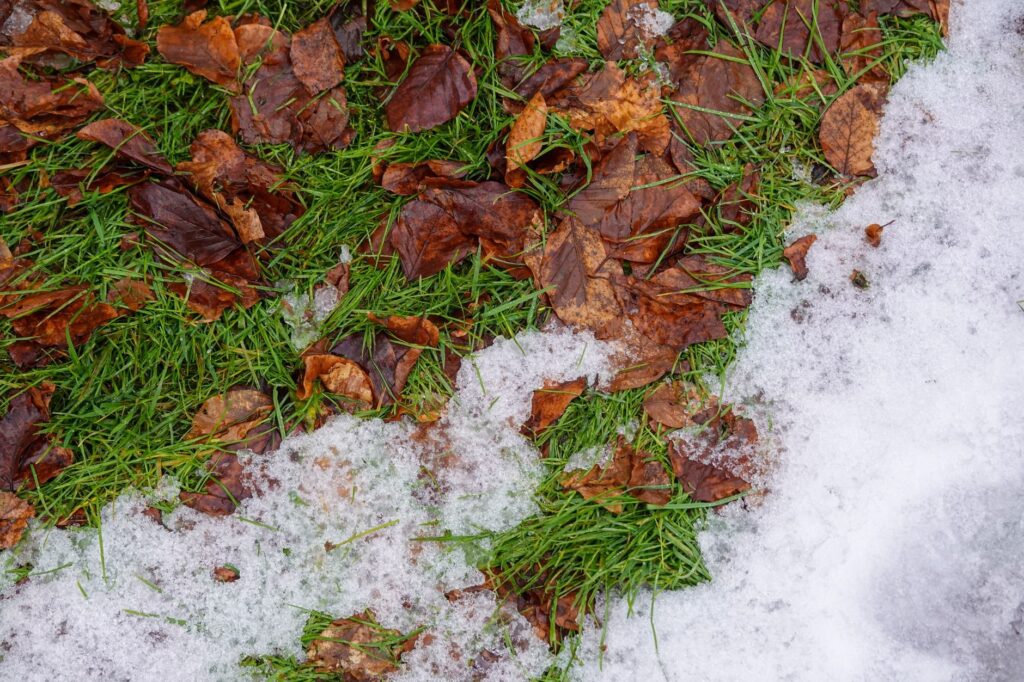
That distinction matters in Skokie, Evanston and the rest of the North Shore, where clay soil and a long freeze-thaw season punish anything built on a thin base. A winter problem in a synthetic lawn is usually an installation problem surfacing months later, which is why experienced artificial turf installers spend most of their time on what goes under the grass. Below is what the manufacturers and a university turf research paper say about cold, snow, ice, summer heat, pets and shade, plus a maintenance calendar.
What Freeze-Thaw Actually Does to a Turf System
ReTurf answers the frost-heave question directly: the grass itself is not affected, but the ground beneath it can move if it was not prepared during installation, which is why a stable base and good drainage matter most in cold climates. It adds that a professional installation typically includes a compacted aggregate base that prevents ground movement through freeze-thaw cycles, and that repeated freezing and thawing only causes problems when the base was not compacted or draining.
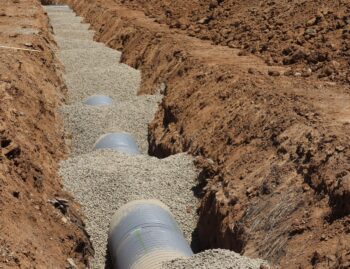
Ideal Turf puts a number on it: no less than three inches of Class II road base on every installation it completes, a mix of larger and smaller crushed and decomposed granite, with the rule that larger base material drains better. On clay that is not a formality — Synthetic Grass Warehouse names clay-based soil as a density problem that can block drainage under a turf system.
The material itself holds up. ReTurf says the backing resists the expansion and contraction caused by temperature changes, that fibers stiffen in the cold but return to normal when it warms, and that cracking is highly unlikely unless the product is old or poor quality. Its one caution: avoid heavy activity on frozen turf, because frozen blades are less flexible and more prone to temporary flattening.
Drainage Is the Whole Winter Story
Snowmelt is rain arriving slowly, and where it goes is set by the backing and the base. Synthetic Grass Warehouse describes standard backing perforations at roughly half a centimeter in diameter, giving a drainage depth of 30 inches per hour per square yard or more. Ideal Turf calls hole-punched backing with holes every four to six inches the most common type, uses fully permeable non-perforated backing where maximum drainage is needed such as pet areas, and rates its own hybrid backing at over 2,000 inches per hour.
Two things block that capacity. Synthetic Grass Warehouse lists infill volume — too much blocks drainage, too little means an improper installation — alongside surfaces that are not level and clay soil underneath. ReTurf's winterizing advice is to check the base drains properly before the season so melting snow does not pool and then freeze into a slippery patch.
Motz adds an infill point specific to wet, freezing conditions: most infill materials perform poorly when saturated. Raw sand compacts and hardens when continuously oversaturated, and crumb rubber loosens and disperses easily during snow removal. Coated sand holds its shape better. For a Chicago yard, wet-and-freezing behavior belongs in the comparison alongside price — covered in our guide to what a turf project costs in the Chicago area.
Snow Removal: What to Use and What to Avoid
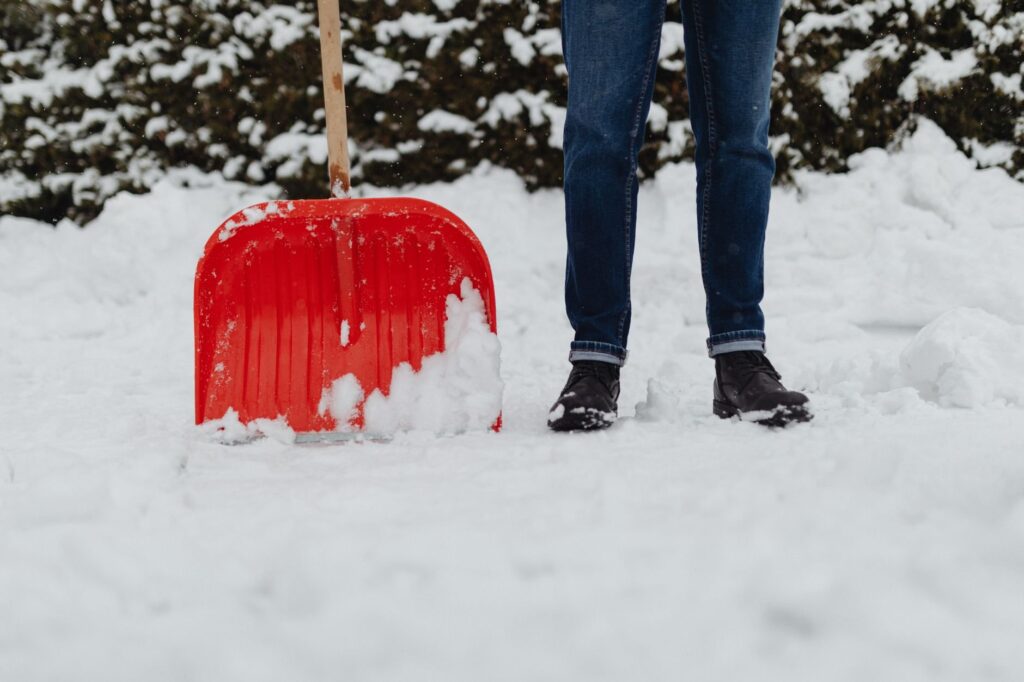
Motz and ReTurf give the same first answer: if you do not need the surface, let the snow melt. When you do need it clear, the tool matters more than the technique.
| Do | Do not | Source |
|---|---|---|
| Let snow and ice melt naturally and drain away | Rush a removal you do not need | Motz, ReTurf |
| Use a plastic snow shovel at a slight angle | Use a metal shovel or metal tools — they scratch or tear fibers and can ding the backing | Motz, ReTurf |
| Use a stiff-bristled broom for light snow, or a leaf blower for a dusting | Dig into the surface with the shovel blade | Motz, ReTurf |
| Use a single-stage snow blower with rubber or plastic blades, height set to skim | Let blades touch the surface, or use a machine with metal components | ReTurf |
| Break ice with a broom, or use ice melt labeled safe for synthetic surfaces | Pick at ice with sharp tools or a metal scraper | ReTurf |
| Brush fibers gently in different directions after the melt | Pour boiling water on ice — it refreezes, and the heat is hard on backing and fibers | ReTurf |
Motz suggests a winter kit ready before the season: a plastic snow shovel, a blower, a soft-bristle broom and towels. Below freezing you can lay dryer-warmed towels on snow to help it melt, and a power broom lifts flattened fibers and loosens compacted infill once the snow is gone. ReTurf agrees compacted snow does no lasting harm.
Neither source recommends covering a lawn. ReTurf says a cover traps moisture that freezes into slippery conditions and is hard to secure in wind; Motz mentions a tarp only if you do not plan to use the lawn at all.
Ice, Rock Salt and De-Icers
Ice does not damage turf, but it makes it slippery, and the wrong melting product does more harm than the ice. ReTurf is direct: regular salt builds up and damages the backing over time, and the safer choice is a product labeled safe for synthetic surfaces — it names calcium chloride-based ice melts as less likely to cause damage. Motz adds the pet angle: de-icing chemicals can harm pets, and salt irritates paws and causes problems if ingested.
Summer Is the Harder Season: UV and Surface Heat
Winter is the season homeowners ask about; heat is the one that stresses a synthetic lawn. A Penn State turfgrass research paper by McNitt, Petrunak and Serensits reports that surface temperatures of traditional synthetic turf can be as much as 35 to 60 degrees Celsius higher than natural turfgrass — roughly 63 to 108 degrees Fahrenheit hotter. It cites infill systems measured as high as 93 Celsius (about 199 Fahrenheit) on a day when air temperature was 37 Celsius (about 99 Fahrenheit).
Cooling it is not simple either. The same paper describes Brigham Young University researchers who cooled an infill system to the temperature of nearby natural grass, 29 Celsius (about 84 Fahrenheit), after 30 minutes of irrigation — then watched it climb back to 49 Celsius (about 120 Fahrenheit) within five minutes. Those are athletic-field measurements, not a Skokie backyard, but the direction is the point: plan shade, or plan around midday use in July.
Product choice softens it. HomeGuide describes polyethylene as resisting UV damage well and holding color over time, and nylon as standing up best to extreme temperatures; it lists enhanced UV stabilization as a paid add-on that prevents fading. Fixr advises buying UV-stabilized product, warns that extreme highs and lows damage lower-quality grass, and notes turf can burn or melt — so keep gravel or hardscape between the grass and a grill or fire pit. HomeAdvisor says the same: low-quality synthetic turf can reflect light, melt, or get hot in summer sun.
Pets Through Winter: Urine, Odor and Paw Safety
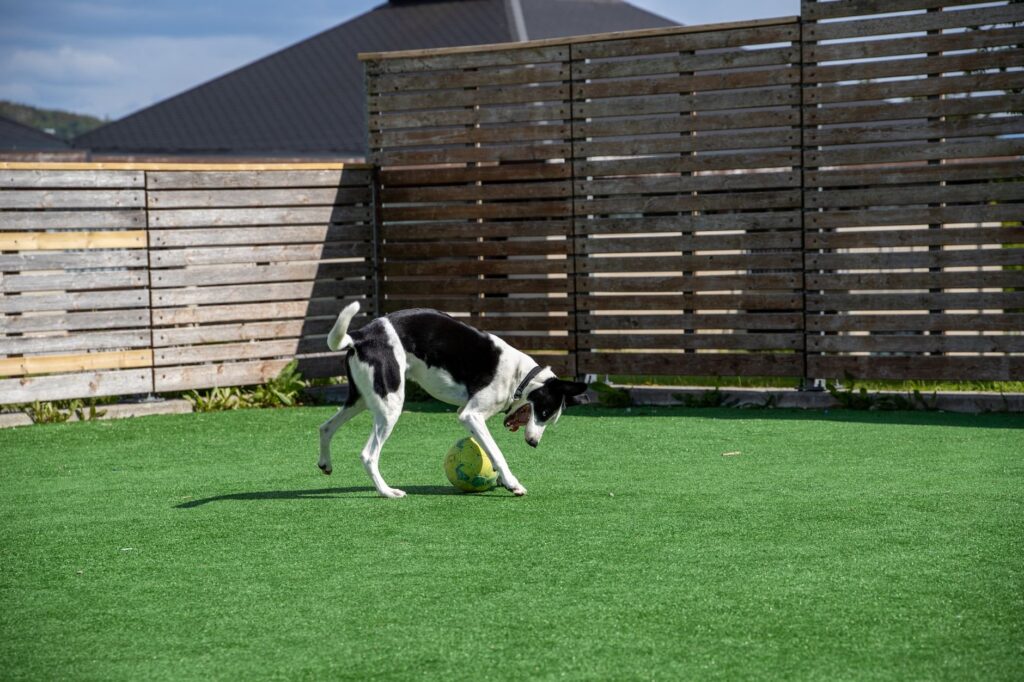
Cold weather concentrates the pet problem rather than solving it. Motz explains why: moisture, ice and the weight of snow clog drainage and create conditions bacteria like. It recommends restricting which areas pets use, hosing them with lukewarm water during the warmer part of the day so they drain before refreezing, and using enzymatic cleaners as usual. For minor buildup or mildew it suggests a one-to-three mix of white vinegar and water.
Infill and backing carry most of the load. Motz says antimicrobial infill prevents the bacteria that cause stains, odors and product deterioration. Ideal Turf builds antimicrobial agents into the backing of its pet products and uses fully permeable non-perforated backing where maximum drainage is required, noting that if liquids do not pass quickly into the sub-base, bacteria build up and cause odors. HomeGuide lists odor-control infill and antimicrobial backing as optional paid features rather than standard ones — so if you have dogs, ask for them by name on the quote.
One note from Motz: turf fibers hold no water, so the surface does not get slick the way natural grass does — but ice and snow on top still make it hard for pets, which is the case for clearing a small path rather than the whole lawn.
Shade Yards and Slow Melt
Shade is where synthetic grass has a genuine structural advantage here. HomeGuide lists problem areas — shaded yards and high-traffic zones where natural grass struggles — as a core reason homeowners choose turf, and Fixr notes turf is not damaged in shaded locations. Under mature North Shore oaks, that is often the whole argument.
The tradeoff in winter is melt speed. ReTurf says turf can absorb heat from the sun and melt snow faster than natural grass in sunny conditions, but in shaded areas or extreme cold the melting rate is similar to other surfaces. A shaded north-side yard holds snow longer than the sunny front lawn — worth knowing before you assume the dog run clears itself.
Artificial Turf Warranties: What to Look For
Warranties come from the turf manufacturer and the terms vary by product. Fixr states that most artificial grass manufacturers have a minimum five-year warranty, while the grass can last 8 to 20 years with proper care. Synthetic Grass Warehouse advertises products backed by up to a 15-year warranty. Angi notes that reputable installers offer warranties of their own, a different document from the product's.
HomeGuide's list of questions to ask an installer includes exactly the right two: do you offer a warranty, and what does it cover. In the product paperwork the useful details are what is covered (fading and fiber degradation are common headings), how many years, whether it is limited or prorated, and whether it transfers if you sell. None of that is something a contractor can promise on a manufacturer's behalf — ask for the product's own document before you sign.
A Chicago Maintenance Calendar
The manufacturer guidance, in season order for this climate:
| Season | What to do | Source |
|---|---|---|
| Fall, before the freeze | Clear leaves and organic matter with a rake, brush or leaf blower; inspect for loose seams, tears and worn areas; confirm drainage is unblocked; check infill is evenly distributed; book repairs before winter. Assemble the winter kit: plastic shovel, blower, soft-bristle broom, towels | Motz |
| Winter | Let snow melt where you can; clear with plastic tools only; check drainage for debris, waterlogging and ice; brush fibers gently; rinse pet areas with lukewarm water midday | Motz, ReTurf |
| Early spring | Brush or power-broom flattened, matted areas to lift the fibers and loosen compacted infill | Motz, ReTurf |
| Ongoing | Remove debris with a blower or plastic rake, rinse occasionally, spot-clean with mild soap and water, remove pet waste promptly, brush fibers to prevent matting | HomeGuide |
| Annual | Redistribute or replenish infill if levels drop; budget maintenance and cleaning at $0.25 to $0.35 per square foot | Motz, Angi |
Winter Turf Care: FAQ
Does artificial grass freeze in a Chicago winter?
The surface can feel hard and the fibers stiffen when temperatures drop, but ReTurf states that does not mean damage — the turf returns to normal once the weather warms. Its advice is to avoid heavy activity while the surface is frozen, since frozen blades are less flexible and more prone to temporary flattening. Frost itself does not cause cracking, warping or wear.
Can you shovel snow off artificial turf?
Yes, with a plastic shovel. ReTurf says metal shovels can scratch or tear the fibers and ding the backing, and recommends keeping the blade at a slight angle so it does not dig in. A stiff-bristled broom is gentler for light snow and a leaf blower handles a dusting. Motz gives the same guidance and lists a plastic shovel in its winter kit.
Can you use salt or ice melt on synthetic grass?
Not rock salt. ReTurf says regular salt can build up and damage the backing over time, and recommends a product labeled safe for synthetic surfaces, naming calcium chloride-based ice melts as less likely to cause damage. Motz warns that de-icing chemicals can harm pets and that salt irritates paws and causes problems if ingested, so restrict use around dog areas.
Does frost heave damage artificial turf?
ReTurf states the grass itself is not affected by frost heave, but the ground underneath can shift if it was not prepared properly at installation. A professional installation typically includes a compacted aggregate base that prevents ground movement through freeze-thaw cycles. Ideal Turf specifies no less than three inches of Class II road base, and notes larger base material drains better.
Does snow melt faster on artificial grass?
Sometimes. ReTurf says the surface can absorb heat from the sun, which melts snow faster than on natural grass, because turf does not hold the same cold moisture. It also says that in shaded areas or during extremely cold weather the melting rate is similar to other surfaces, so a shaded yard will hold snow about as long as the rest of the property.
How do you handle dog urine on turf in winter?
Motz recommends restricting which areas pets use, hosing those areas with lukewarm water during the warmer part of the day so it drains before refreezing, and using enzymatic cleaners as normal. It says antimicrobial infill prevents the bacteria that cause stains and odors. Ideal Turf builds antimicrobial agents into pet-turf backing and uses fully permeable backing for maximum drainage.
Does artificial grass get too hot in summer?
It runs much hotter than grass. A Penn State research paper reports synthetic turf surfaces as much as 35 to 60 degrees Celsius above natural turfgrass, and cites infill systems measured at 93 Celsius when air temperature was 37 Celsius. HomeAdvisor lists summer heat as a drawback, and Fixr advises choosing UV-stabilized products and keeping fire away from the surface.
Talk Through Your Yard Before the First Freeze
Almost everything that goes wrong with a synthetic lawn in a Chicago winter traces back to the base, the drainage and the infill — decisions made on installation day, not in January. If you are weighing turf against keeping real grass or planting something else, our guide to other lawn alternatives for North Shore yards lays out the options. R & G Almanza Landscape Inc is a family-owned, insured crew working across Skokie, Evanston, Chicago and the North Shore since 1999. Contact us to talk through your yard's drainage and soil.
Call R & G Almanza Landscape at (847) 869-8584 to discuss a turf project or a winter check.