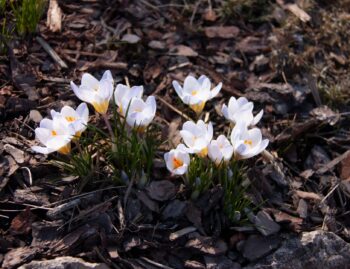
The lawn alternatives that work on a North Shore lot are native prairie or pollinator plantings, a sedge lawn, a clover or mixed bee lawn, shade groundcovers under mature trees, gravel-and-stepping-stone courtyards, and synthetic turf on the play area or dog run. Illinois Extension names Pennsylvania sedge, creeping lily turf and white clover as turfgrass substitutes, and the Morton Arboretum places Northern Illinois in USDA Zone 5 and the City of Chicago in Zone 6 — the hardiness range every plant choice here has to survive.

Most people searching this in Evanston, Wilmette, Winnetka, Glencoe or Skokie are not chasing a trend. They have a north-side strip where grass never filled in, a water bill they resent, a mowing routine they are tired of, or a village program nudging them toward natives. Each points at a different answer, and one — artificial grass installation on a small play or pet area — is the right call less often than the industry suggests. Below is the comparison, with sources for every plant and rule.
Why North Shore Homeowners Are Replacing Turfgrass
Shade. Under mature oaks and maples, turfgrass loses. The Morton Arboretum describes American hornbeam as a native forest understory tree in the Chicago area, useful for shady landscapes and woodland gardens — shade-adapted plants exist here because the region's woodlands selected for them.
Water and inputs. The Village of Wilmette's pollinator page states that native plants are frequently more resistant to insects and disease and generally require less watering and fertilizing than non-natives. Skokie's sustainable gardening page makes the money version: most natives are perennial, come back year after year, and rarely require fertilizers or much watering once rooted.
Maintenance and equipment rules. The City of Evanston prohibited gasoline- and propane-powered leaf blowers as of April 1, 2023, with no seasonal restrictions on electric models, and asks residents and contractors to phase out fossil-fuel lawn equipment, eliminate synthetic pesticides and herbicides, use native plants and organic fertilizer, and allow natural leaf decomposition. Wilmette frames it in emissions terms: mowers and trimmers emit 10 to 34 times more hydrocarbons than a typical car.
Village pollinator programs. Wilmette offers residents a free native habitat yard sign through its Environmental and Energy Commission and lists local examples including the Edens Pollinator Garden at Lake and Laramie. Skokie has updated its Beautification Awards criteria to promote native plants and runs an annual competition with a pollinator-pantry category. Skokie also cites stormwater: natives have deep roots and foliage that holds rainwater, reducing seepage and overland flooding.
The Six Options, Compared
| Option | Install effort | First-year care | Mowing | Water | Look in winter |
|---|---|---|---|---|---|
| Native prairie / pollinator planting | High: removal, bed prep, many plants | Water to establish; weed while they fill in | None | Little once rooted (Skokie) | Seed heads and grasses add interest; leave stems until spring (Wilmette) |
| Sedge lawn | Medium-high: plugs across the area | Water to establish | None to occasional | Drought tolerant once established (Illinois Extension) | Low mats go dormant; quiet, not showy |
| Clover or bee lawn | Low: overseed existing grass | Normal care, higher cut | Yes, 3 inches or more (Illinois Extension) | Greener in drought (Illinois Extension) | Dormant like turfgrass |
| Shade groundcovers | Medium: plant under existing trees | Water to establish; mulch until they knit | None | Varies by species | Berrying plants carry the season |
| Gravel courtyard, stepping stones | High: excavation, base, edging, stone | Almost none | None | None | Unchanged year-round |
| Synthetic turf (play or pet area) | High: excavation, compacted base, drainage | Debris removal only | None | None | Stays green; snow sits on top |
Native Prairie and Pollinator Plantings

Biggest payoff, most front-loaded work. Skokie's page lists favorites for local gardens: black-eyed Susan, swamp milkweed, purple Joe Pye weed, prairie blazing star, New England aster, prairie dropseed and showy goldenrod. For a tidier look it suggests cardinal flower, false indigo, purple coneflower and prairie phlox; its rabbit-resistant list includes nodding onion, wild columbine, rattlesnake master and wild bergamot.
Two rules separate a planting that looks intentional from one that looks abandoned. Wilmette says not to cut down spent flowers, stems and dead plant material until spring, because pollinators rely on hollow stems for winter shelter and because seed heads and native grasses add winter interest while feeding birds. Skokie's code rule is the other: nothing over 8 inches tall on the parkway, nothing over 24 inches near driveways or alleys, and no visibility or safety problems. Rules differ by village, so check yours before planting the strip by the street. The fuller version of this approach is on our page about native landscaping in Chicago.
Sedge Lawns for Shade
Sedges are the closest thing to a true no-mow lawn in this climate. Illinois Extension notes the field distinction first — sedges have edges, triangular stems instead of the round or flat stems of grasses — then describes Pennsylvania sedge (Carex pensylvanica) as the living mulch: it suppresses weeds, adds organic matter to the soil, has a fibrous root system, is shade loving and drought tolerant, grows in poor soil, protects tree roots from mowers, and is low maintenance once established.
For narrower conditions, Illinois Extension points to two more sedges from the Missouri Botanical Garden's list. Cedar sedge (Carex eburnea) makes three-inch "pocket-sized emerald green tufts of hair-like leaves" that form a dense mat in dry, shady places. Oak sedge (Carex albicans) grows 8 to 10 inches in shade to part sun on dry to moist soils. Those cover the hard cases: dry shade under a canopy, and the edge where a bed meets sun.
Clover and Mixed Bee Lawns
Clover is the lowest-effort switch here because you remove nothing — you overseed into what you have. Illinois Extension's case for white clover is specific: it is an excellent pollinator plant, it makes its own nitrogen so it needs less fertilizer, it stays greener during drought which reduces watering, and it has no serious pests. Its one management rule is to mow high, at three inches or more, so clover does not dominate the grass.
Illinois Extension also says people chasing a perfect carpet-like lawn consider white clover a very difficult weed. If a uniform single-species lawn is the goal, clover is not for you. If a soft, pollinator-friendly surface that takes less fertilizer is the goal, it is the least expensive move.
Groundcovers Under Mature Trees
Where a sedge lawn is too plain, groundcovers do the same job with more visual interest. Illinois Extension calls creeping lily turf (Liriope spicata) a vigorous spreading groundcover and a low-maintenance substitute for turfgrass in small spaces: 8 to 12 inches tall, full sun to very light shade, hardy to zone 4, drought tolerant, with light blue flowers in late summer.
For choosing among the rest, the Morton Arboretum's Ground Cover Garden is the regional reference — planted in 1938, with more than 350 types of plants and signs on choosing ground covers compatible with trees. The attributes it tells gardeners to weigh are flowers, foliage, mature size, hardiness, light requirements, and pest and disease resistance. It answers the winter question directly: Virginia bluebells in spring, and the bright red berries of common winterberry through the cold months.
Gravel Courtyards and Stepping-Stone Paths
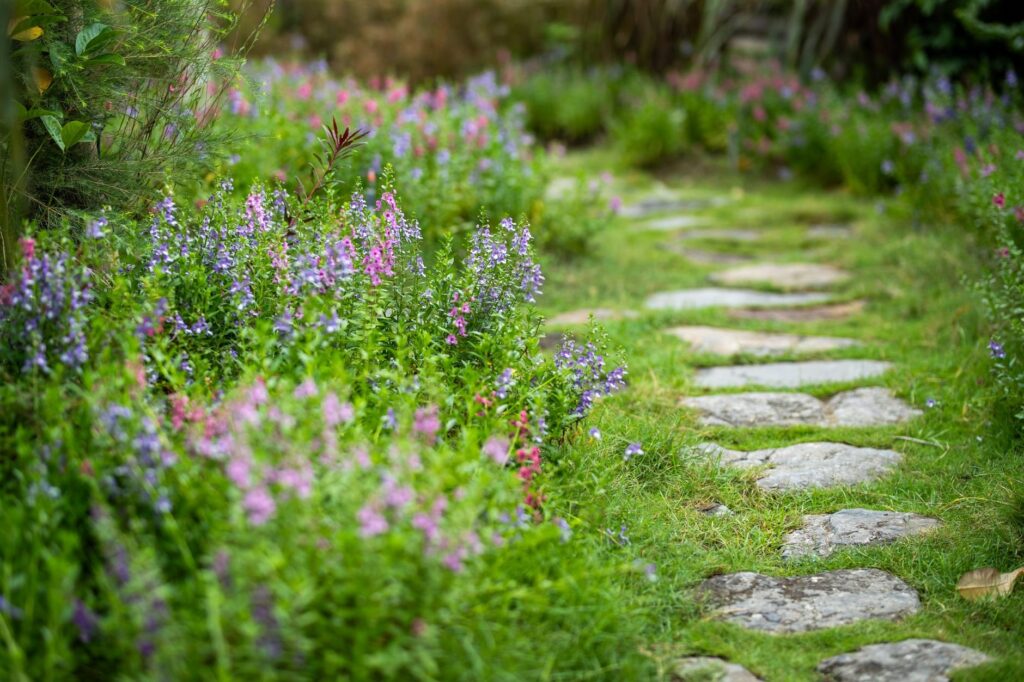
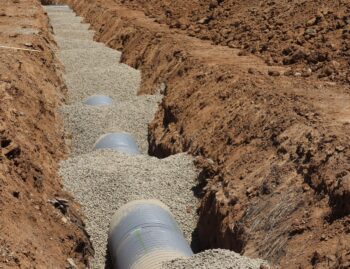
Some parts of a yard should stop pretending to be a lawn. A side yard too narrow to mow, a shaded passage between houses, a seating area that gets trampled — these are better as gravel, stone or stepping stones with planting between them. No watering, no mowing, no seasonal change, and the surface reads as deliberate rather than failed. It is still hardscape, so it is built like hardscape: excavation, a compacted base, edging, and a drainage plan, because gravel on Chicago clay still has to send water somewhere. It also combines well with the others — a stone path through a sedge lawn, or a gravel courtyard framed by a pollinator bed.
Synthetic Turf for the Play Area or Dog Run
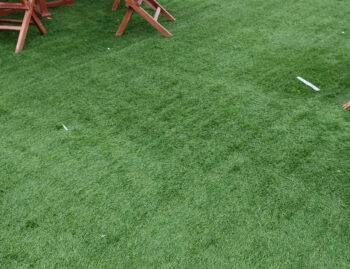
Synthetic grass earns its place on a small area where nothing else survives: a dog run, a swing-set landing, a narrow side yard. HomeGuide lists shaded yards and high-traffic zones where natural grass struggles as core reasons homeowners choose it, along with no mowing, no watering and year-round green. It prices it at $10 to $25 per square foot installed — which is why it works as a small-area decision and rarely a whole-yard one.
The tradeoffs belong in the same sentence as the benefits. HomeAdvisor lists that it gets hot in summer, that it is plastic and not recyclable, and that it interferes with the lawn's natural ecosystem by affecting soil quality and preventing beneficial plants from growing. If you are weighing it for one section, we cover how synthetic turf handles a Chicago winter, including the base and drainage work that decides whether it lasts.
Plant Lists That Work in Chicago-Area Hardiness
Reading a plant page before you buy
The Morton Arboretum's plant pages publish the fields that decide whether a plant survives here. Its American hornbeam entry lists hardiness zones including Zone 5 (Northern Illinois) and Zone 6 (City of Chicago); light requirements as full sun at six or more hours daily, partial sun or shade at four to six, and full shade at four or less; plus soil preference and tolerances. It also states whether a species is native to the Chicago region according to Wilhelm and Rericha's Flora of the Chicago Region. Wilmette's homeowner version of the same measurement is to track direct sun on the spot hour by hour for a few days and take the average. Match zone, light, soil and moisture to the spot in your yard and most plant failures stop happening.
Village-tested picks
Skokie also names woody plants that perform locally: swamp white oak, bur oak, American basswood and river birch for shade; serviceberry, eastern redbud, pagoda dogwood and American hornbeam as small trees; arrowwood viburnum, red osier dogwood, witch hazel and black chokeberry as shrubs. It asks residents to remove European buckthorn, which it notes persists in many yards as a hedge and takes over woodland understories within a few years.
How to Make the Switch, Step by Step
- Inventory the yard first. Skokie advises noting what you like about the existing landscape, whether you have good screening or shade (both take years to replace), any natives you already have, and each area's conditions by season and time of day.
- Start small. Skokie recommends adding a few native species to new or existing beds and containers first, rather than converting everything at once.
- Remove invasives before you plant. Wilmette puts this ahead of plant selection, noting that all invasive species are non-native even though not all non-natives are invasive.
- Kill the old lawn without chemicals. Penn State Extension's sheet-mulching method smothers lawn by layering cardboard with mulch, then letting the bed rest a few months before planting — over the winter is perfect. The mulch breaks down and builds organic matter. Vary the depth: more for vegetables and annuals, less for native perennials that need poor soil.
- Call JULIE before you dig. Skokie's page gives the number, 1-800-892-0123, and notes the utility locate is free.
- Plant in the right window. Wilmette says most natives can go in between May 1 and the first frost, that spring planting needs less water because plants establish before summer heat, and that fall plantings need time to root before the first hard freeze — too late and freeze-thaw may pop them out.
- Leave the leaves and the stems. Wilmette and Evanston both ask for natural leaf decomposition; Wilmette adds that lawns benefit from a thin layer of leaves, and the rest can be piled around trees, shrubs and beds, where they suppress weeds and hold moisture.
Lawn Alternatives: FAQ
What is the easiest lawn alternative for a North Shore yard?
Overseeding white clover into the lawn you already have — no removal, no bed prep, no new irrigation. Illinois Extension says white clover is an excellent pollinator plant, makes its own nitrogen so it needs less fertilizer, stays greener during drought and has no serious pests. Mow high, at three inches or more.
Will a lawn alternative get me in trouble with my village?
Rules differ by municipality, so confirm yours before planting. Skokie tells residents to be mindful of village codes and specifically not to plant anything over 8 inches tall on the parkway, or over 24 inches near driveways or alleys, or create visibility or safety problems. Evanston and Wilmette both encourage native plantings.
What grows where grass will not, under mature trees?
Sedges. Illinois Extension describes Pennsylvania sedge as shade loving and drought tolerant, growing in poor soil, suppressing weeds and protecting tree roots from mowers. For dry shade it points to cedar sedge, which forms a dense mat of three-inch tufts; oak sedge handles shade to part sun at 8 to 10 inches.
Is clover a real lawn replacement or just a weed?
Both, depending on what you want. Illinois Extension notes that people pursuing a perfect carpet-like lawn consider white clover a very difficult weed, then argues the stereotype deserves lowering because clover feeds pollinators, fixes its own nitrogen, needs less fertilizer and stays greener in drought. If uniformity matters more than inputs, clover is wrong for you.
What hardiness zone is the Chicago area?
The Morton Arboretum's plant pages list Zone 5 for Northern Illinois and Zone 6 for the City of Chicago, following the USDA Plant Hardiness Zone Map. North Shore suburbs sit on the Zone 5 side of that split, so a plant rated only to Zone 6 is a risk here.
How do I remove the old lawn without chemicals?
Sheet mulching. Penn State Extension's method layers cardboard over the lawn, covers it with mulch, and lets the bed rest a few months before planting — it recommends over the winter. The vegetation underneath is smothered and the mulch breaks down into organic matter. Use less depth for native perennials, which prefer poorer soil.
When should I plant a native lawn alternative?
Wilmette's guidance is that most natives can go in any time between May 1 and the first frost. Spring planting needs less water because roots establish before summer heat; mid-summer works if you can water enough. Fall plantings need time to root before the first hard freeze, or freeze-thaw can push them out.
Plan Your Lawn Replacement
Most North Shore yards end up with a combination rather than one answer: natives where the sun is, sedges or groundcovers under the trees, stone where nothing should grow, and a small durable surface where the kids or the dog play. Which combination fits depends on your shade, soil and how you use the space. R & G Almanza Landscape Inc is a family-owned, insured crew working across Skokie, Evanston, Wilmette, Winnetka, Glencoe and the greater Chicago area since 1999. Contact us to walk the property and plan the change.
Call R & G Almanza Landscape at (847) 869-8584 to talk through replacing part of your lawn.