In the Chicago area, seed is the cheaper option and sod is the faster, more forgiving one. University of Illinois Extension puts the ideal seeding window for northern Illinois at early August to early September, with April a distant second, and says sod "may be planted anytime during the growing season." Fixr puts seed at about $0.09 to $0.18 per square foot installed against $0.85 to $1.75 for sod, and HomeGuide calls seeding 30% to 50% less than resodding. Seed if you can wait and hit the window. Sod if you need the lawn now, the ground slopes, or you are planting outside it.
The real decision sits underneath that: how fast you need grass, what the slope will do to bare soil, how much weed pressure the yard has, and how much watering you can commit to in the first two weeks. This guide walks the comparison, the Chicago planting calendar, and what sod installation asks of you in the first 30 days, using Illinois Extension guidance, a Chicago-area sod farm's own instructions, Penn State Extension turf science, and published 2026 figures from HomeGuide, Fixr and HomeAdvisor.
Sod or Seed: the Trade in One Table
Illinois Extension lists the advantages and drawbacks of each method for Illinois lawns. Rows below are Extension's, paired with published cost figures.
| Factor | Sod | Seed |
|---|---|---|
| Cost installed | $0.85 to $1.75 per sq ft (Fixr) | $0.09 to $0.18 per sq ft (Fixr); 30% to 50% less than resodding (HomeGuide) |
| Time to a usable lawn | "Instant lawn," trafficked soon after planting | Slow stand development; months, sometimes a full season (also HomeAdvisor) |
| Planting window | Anytime during the growing season | Timing of establishment is critical |
| Erosion and bare soil | Dust, mud and erosion are reduced | Rain or irrigation washes seed away |
| Weeds | Weed-free at installation, though sod may shrink and weeds invade | Weeds will be a problem |
| Water | Large volume of water needed initially | Initial watering is critical |
| Species choice | Limited; not grown in shade | Larger selection; turf develops in the environment it will live in |

Extension's own summary is worth holding onto: "Assuming planting is done properly, the end result of a healthy lawn should be the same." The choice is about cost, speed and risk, not about which lawn ends up greener.
When Seed Wins and When Sod Wins
Seed is the better buy when
You are planting inside the northern Illinois window, the ground is flat enough that a hard rain will not move it, and you can keep the seedbed damp for a few weeks. Seed also wins in shade: Extension notes sod is not grown in a shaded environment and its species choice is limited, while a seed mix can lean on fine fescues. Extension's seeding rates for a new lawn are 1 to 3 pounds per 1,000 square feet for a Kentucky bluegrass blend and 6 to 9 for a tall fescue blend.
Sod earns its price when
You need the lawn usable now, the yard slopes, or you missed the seeding window. Extension is direct about erosion: with sod, dust, mud and erosion are reduced, and on steep hillsides sod goes across the slope starting at the bottom. Bare seeded soil on that slope is a washout waiting for the next storm. Sod is also the answer on a lot with heavy weed pressure, since it arrives weed-free while a seeded lawn fights weeds all first season.
Artificial turf comes up in the same conversation, and cost settles it for most homeowners: HomeGuide puts artificial turf at $10 to $25 per square foot, roughly ten times installed sod. It needs no mowing or water, which is the real argument for it, but it is a different budget.
When to Lay Sod in Chicago: Two Windows
Chicago grows cool-season grass, so the calendar follows root growth. Two windows work and one does not.
Spring, roughly April into early June. An Illinois Extension horticulture educator puts the rule plainly: "I often say sod in the spring and seed in the fall." Spring suits sod because the soil is warming while air temperatures stay moderate, and the lawn gets a full season to root. Spring is weak for seed, for three reasons Extension names: cold soil slows germination, summer heat is coming, and wildlife eat more seed coming out of winter.
Late summer into fall, roughly mid-August into October. This is the strongest seeding window in northern Illinois: early August to early September per Extension, or mid-August through the first week of September in one educator's narrower advice. It suits sod too. Central Sod Farms of Illinois says fall is a great time to install, because cooler weather means the sod is less likely to dry out.
Midsummer is the window to avoid. HomeGuide says not to install sod in the middle of summer, because extreme heat can kill some new grass quickly, and Extension warns that seeding from late spring through mid-summer often fails as heat slows or stops cool-season growth.
How late is too late? The sources differ, and the answer depends on the ground. HomeGuide advises spring or fall at least one to two months before the first freeze, and notes installers cannot lay sod on frozen ground. Central Sod says its cool-season grasses can be installed all year. The National Weather Service gives the anchor date: the normal first autumn low of 32 degrees or lower at Chicago O'Hare is October 19, based on 1991 to 2020 data. Working back one to two months puts the comfortable end of the fall window in late August or September, with October installs tighter. Cost does not change with the calendar, so see what sod installation costs in Chicago and plan the date around the ground.
Soil Temperature: Why Those Windows Work
The calendar is a proxy for soil temperature. Penn State Extension puts it in numbers: most cool-season turfgrasses produce the best root growth at soil temperatures between 50 and 65 degrees Fahrenheit. Roots still grow below 50, but growth slows dramatically as the soil approaches freezing, and when the surface inch reaches 90 degrees, Kentucky bluegrass root growth is greatly reduced. Root growth is greatest in spring and fall, which is why the two windows sit where they do.
It also explains the depth a new lawn works with: Penn State puts rooting depth for cool-season turf at 2 to 6 inches, so early water uptake happens near the surface. For seed, temperature shows up as germination speed, which an Illinois Extension educator puts at as little as five days for ryegrasses and 10 to 14 days for bluegrasses.
Before the Pallets Arrive: Grade, Soil Test, Firm Bed
Illinois Extension is blunt that sod asks for the same soil preparation as seed, "identical to what is done for seeding." Three things come first.

Grade. Extension calls for a final slope of one to two percent away from buildings, a drop of one to two feet per hundred feet of run, with depressions and raised areas eliminated first. Sod does not fix a grade, it hides one until the next storm.
Soil. Amend poor soils such as heavy clay with organic matter, not sand, and aim for six inches or more of well-prepared soil. Extension recommends testing during planning, because pH and nutrient corrections are easier before a lawn goes in than after. Central Sod notes soil test results take about two weeks, so start soil testing before a new lawn weeks ahead of the install date, not the week of.
A firm bed. Extension's detail is the one most often skipped: the bed should be firm enough that walking on it leaves no footprints, because footprints covered by sod stay as indents and make a bumpy lawn. Central Sod adds that the soil should be moist while the sod is laid, for soil-to-soil contact with no air pockets.
The First 30 Days: Water, Then Mow
New sod is a plant that just lost most of its roots, so the first month is a watering schedule.
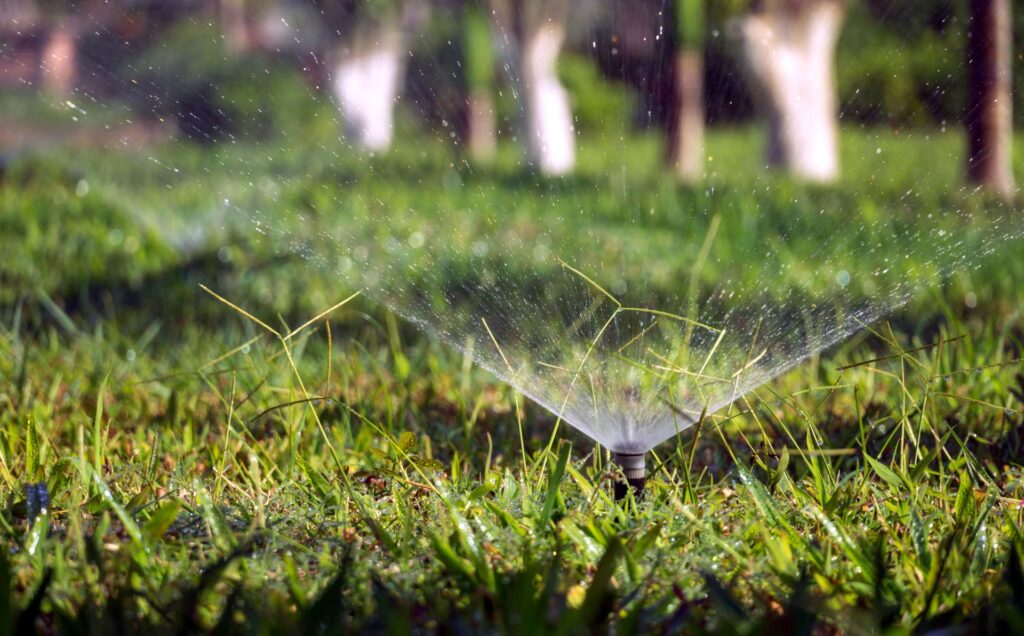
| Stage | What to do | Source |
|---|---|---|
| Day 1 | Water thoroughly and deeply so the soil under the sod is wet, not just the sod | Illinois Extension |
| Week 1 to 2 | Water daily, roughly an hour; keep the soil moist, not soaked | Central Sod Farms of Illinois |
| Week 1 (alternate schedule) | Water one to two times daily, then every other day for two more weeks | HomeGuide |
| Day 10 to 14 | Roots begin to hold; tug a corner to check, and keep traffic off until then | Illinois Extension, HomeGuide, Fixr |
| Around week 2 | First mow once the grass reaches 3 to 4 inches; stop watering a day or two beforehand so the mower does not rut the lawn | Illinois Extension, Central Sod |
| Week 4 to 6 | Roots stabilize; normal mowing, edging and feeding resume | HomeGuide |
Two rules hold throughout. Never remove more than one third of the grass blade in a single mowing, and keep the cut high: Extension suggests 2.5 to 3 inches, Central Sod 3.5 inches through summer and 3 inches otherwise. Extension also says to wait on fertilizer, feeding a newly sodded lawn at the next scheduled time rather than immediately, with May and September the key months and fall preferable if you feed once a year.
The First Winter
A lawn installed in late summer or early fall goes into winter still rooting, which is fine if it goes in fed and watered. Central Sod recommends fall as the best time to feed a lawn: about one pound of nitrogen per 1,000 square feet around Labor Day weekend, with a second application the first week of November. Extension's caution runs the other way after that, against over-applying nitrogen in spring or summer.
Expect the lawn to go dormant and brown in the cold, and to green up again. Central Sod notes crabgrass dies with the first killing frost, usually late October, and that a pre-emergent belongs in early spring, not the fall of the install year. Once the sod has rooted firmly, Extension recommends core aerating for a deeper root system, which matters most on a compacted clay lot going into its second summer.
Five Ways New Sod Fails
- Dry edges. The perimeter dries first, especially against driveways and walks. Extension's fix is structural: cut a small trench next to paved areas so the sod roots sit below the paved surface instead of exposed to air.
- Gaps and stretching. Extension says to stagger seams like brickwork and avoid stretching sod or leaving gaps. Stretched sod shrinks back as it dries, and every gap becomes a dry strip, then a weed strip.
- Laid over compacted clay. Sod on unprepared, compacted soil roots slowly or not at all. Extension's standard is six inches or more of prepared soil, amended with organic matter, not sand.
- Too much water. Fixr describes overwatered sod as soggy and muddy with yellow or brown blades, and warns that constant saturation rots roots. The target is moist, not soaked.
- Laid over an existing lawn. Fixr calls this possible but not recommended, because the new sod may not root through old turf. Extension treats weed and old-grass removal as a first step, not an option.
One more: sod is perishable. Central Sod advises installing within 24 hours in the 80s, allows a couple of days at 50 to 70 degrees, and up to a week near freezing, because sod starts breaking down as soon as it is cut.
New Lawn Questions, Answered
Is sod or seed better for a Chicago lawn?
Both produce a healthy lawn when planted properly, per Illinois Extension. Seed costs less, about $0.09 to $0.18 per square foot versus $0.85 to $1.75 for sod (Fixr), and offers a wider species choice. Sod gives an instant lawn, reduces erosion, arrives weed-free and can go in anytime in the growing season. Slope, shade, weed pressure and speed decide it.
When is the best time to lay sod in Chicago?
Spring and late summer into fall. An Illinois Extension educator's rule is "sod in the spring and seed in the fall," and a Chicago-area grower says fall installs benefit from cooler weather. HomeGuide advises spring or fall at least one to two months before the first freeze, and the normal first 32-degree low at Chicago O'Hare is October 19 (National Weather Service, 1991 to 2020).
Can you lay sod in the summer?
It can be done, but it is the riskiest window. HomeGuide advises against installing in the middle of summer because extreme heat can kill new grass quickly. Penn State Extension explains why: when the surface inch of soil hits 90 degrees, Kentucky bluegrass root growth is greatly reduced. A summer install needs more water, faster laying and tighter scheduling with the farm.
How long does new sod take to root?
Illinois Extension says sod ideally begins to root within 14 days, and suggests tugging on the rolls to check. HomeGuide puts shallow roots at 10 to 14 days with roots stabilizing in 4 to 6 weeks, and Fixr says rooting begins in two to six weeks depending on conditions. Keep foot traffic off until the sod resists a tug.
How often should you water new sod?
Water deeply right after installation so the soil beneath the sod is wet. Central Sod Farms of Illinois then recommends watering daily for roughly an hour for the first two weeks, then every other day, then less. HomeGuide's schedule is one to two waterings daily for the first week, then every other day for two more weeks. Aim for moist soil, never saturated.
When can you mow new sod?
Around two weeks, once the grass is tall enough. Central Sod recommends mowing two weeks after installation and reducing water a day or two beforehand so the mower does not rut the lawn. Illinois Extension says to mow once the grass reaches 3 to 4 inches, never removing more than one third of the blade, and to keep the lawn at 2.5 to 3 inches after that.
Can you lay sod over an existing lawn?
It is not recommended. Fixr says new sod laid over old grass may not take root, because the roots struggle to reach the soil below. Illinois Extension treats removing existing weeds and grass as the first step in site preparation, ahead of tilling, amending and grading. Stripping the old lawn costs more, and it is what lets the new one root.
Talk Through Your New Lawn
Sod or seed, and the date you plant, depend on things best judged in the yard: how the ground drains, how much sun the back corner really gets, how compacted the soil is under the grass you have now. R & G Almanza Landscape Inc is a family-owned, insured crew that has worked on lawns across Skokie, Evanston, the North Shore and the greater Chicago area since 1999. Contact us to request an estimate at rgalmanza.com/contact.
Call R & G Almanza Landscape at (847) 869-8584 to talk through timing and prep.