Lawn leveling and yard regrading in the Chicago area typically costs $1,022 to $3,333 for a standard lot, averaging about $2,177 nationally, per 2026 data from Angi and HomeAdvisor. Small fixes start near $500, while regrading a 10,000-square-foot lot runs $10,000 to $20,000. Price depends mainly on yard size, slope, and fill dirt needed.
That range is wide because "lawn leveling" covers very different jobs. Filling a few low spots with topsoil is a half-day fix. Regrading an entire yard so water moves away from the foundation, especially on the heavy clay soil common across Skokie, Evanston, and the North Shore, is closer to a small excavation project. Below is a plain-English breakdown of what lawn leveling and yard regrading actually cost, using published 2026 ranges from Angi, HomeAdvisor, HomeGuide, Modernize, and Fixr, plus the Chicago-specific factors that push a project toward the low or high end of its range.
Lawn Leveling Cost by Method: Topdressing, Grading, and Full Regrade
"Lawn leveling" is really three different scopes of work, and the price jumps at each step. The ranges below are published 2026 figures and are market ballparks, not a quote for your yard.
| Method | Installed cost | What it involves | Source |
|---|---|---|---|
| Fine or finish grading (topdressing) | $0.40 to $1.00 per sq ft | Smoothing and leveling the top 1 to 3 inches of soil | HomeGuide |
| Rough grading / regrading | $1 to $2 per sq ft | Moving soil across the yard to correct slope, low spots, or standing water | HomeGuide, Angi, HomeAdvisor |
| Full regrade with drainage | Often $10,000 or more on large lots | Recontouring the whole yard plus a French drain, catch basin, or swale system | Angi, HomeAdvisor |
Topdressing and light leveling
If your lawn has a handful of shallow low spots, an ankle-turning dip, or a bumpy patch a mower snags on, that is usually a topdressing job. A crew fills the low areas with a sand-and-soil blend and rakes it level with the surrounding grass, at $0.40 to $1.00 per square foot, the range HomeGuide publishes for fine or finish grading of the top 1 to 3 inches of soil. This is the least expensive lawn leveling method because it does not change the underlying grade, just the surface.
Rough grading and regrading
When the problem is the slope itself, not just the surface, the job becomes rough grading. A contractor cuts and fills soil to change the pitch of the yard, most often to stop water from pooling near the house or running toward a neighbor's property. HomeGuide, Angi, and HomeAdvisor all put this work at roughly $1 to $2 per square foot, which lines up with Fixr's separate figure of $1,500 to $2,600 to regrade a 1,000-square-foot yard with a 2-foot slope. Yard grading and drainage work like this is usually planned alongside a look at where downspouts and low points already send water, since regrading and drainage end up being the same project.
Full regrade with a drainage system
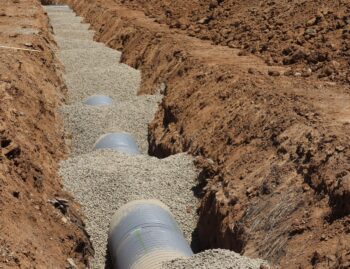
The most expensive tier adds engineered drainage, typically a French drain, catch basin, or swale, on top of a full-yard regrade. Angi and HomeAdvisor both price regrading a 10,000-square-foot lot at $10,000 to $20,000, and their cost tables list French drains at $500 to $18,000 and retaining walls at $3,200 to $9,200 on top of the earthwork. This tier is common on North Shore lots with a genuine drainage problem, not just a bumpy lawn.
Yard Regrading Cost by Lawn Size
Because most quotes scale with square footage, size is the fastest way to ballpark your own project. The figures below are published 2026 ranges from Angi and HomeAdvisor.
| Lawn size | Square feet | Regrading cost | Source |
|---|---|---|---|
| Small yard / spot repair | Up to 250 sq ft | About $550 | Fixr |
| Small lawn | 1,000 sq ft | $1,000 to $2,000 | Angi, HomeAdvisor |
| Mid-size lawn | 2,000 sq ft | $2,000 to $4,000 | Angi, HomeAdvisor |
| Large lawn | 5,000 sq ft | $5,000 to $10,000 | Angi, HomeAdvisor |
| Very large lot | 10,000 sq ft | $10,000 to $20,000 | Angi, HomeAdvisor |
Slope matters as much as size. Fixr breaks out the cost to regrade a 1,000-square-foot yard by how much the grade has to change:
| Slope change (1,000 sq ft yard) | Cost | Source |
|---|---|---|
| 1 foot | $1,000 to $1,200 | Fixr |
| 2 feet | $1,300 to $1,500 | Fixr |
| 5 feet | $2,200 to $2,400 | Fixr |
The pattern holds across every source: cost climbs with both the area being regraded and how much soil has to move to fix the slope. A yard that just needs its surface leveled costs far less than one that needs several feet of grade change to keep water from running toward the house.
Fill dirt and topsoil: the material cost inside every quote
Most regrading quotes include fill dirt to build up low areas and topsoil to finish the surface for new grass. Fill dirt runs $5 to $30 per cubic yard (Angi, HomeAdvisor) or $7 to $12 per cubic yard (Fixr), and topsoil runs $12 to $55 per cubic yard across both sources. A typical 1,000-square-foot regrade with a 2-foot slope uses roughly 5 cubic yards of fill dirt and 10 cubic yards of topsoil (Fixr), which is why material alone can account for several hundred dollars of a mid-size project before labor is added.
What Drives Lawn Leveling and Yard Grading Cost in Chicago
National ranges are a starting point, but a yard in the Chicago area answers to local ground, and local ground here is demanding in a few specific ways.
Heavy clay soil across the North Shore
Much of Skokie, Evanston, and the surrounding North Shore sits on dense clay that drains slowly and holds water instead of letting it soak away. A regrade on clay needs more attention to compaction and drainage than the same job on sandy or loamy soil, because clay that is not graded and compacted correctly stays soft, holds standing water, and can settle unevenly after the first heavy rain. This is one of the main reasons a well-built Chicago-area regrade costs more than a national average number alone suggests.
Freeze-thaw and frost heave
Chicago winters bring repeated freeze-thaw cycles, and water trapped in clay soil expands as it freezes, a movement called frost heave. A yard that was leveled without accounting for how the soil moves through winter can develop new low spots or ridges by the following spring. Grading work planned around the local frost cycle, rather than a one-time flat pass, holds its shape longer.
Downspout and drainage tie-in
A lawn leveling project rarely stands alone from where your downspouts empty. If regrading changes the slope near the house without also directing downspout discharge away from the new grade, water can pool right back where it started, or move toward a different low spot it did not reach before. Tying grading and drainage together in one plan, rather than leveling the lawn and treating downspouts as a separate problem, is what keeps a regrade from needing a repeat visit.
Permits: check with your village
Grading that changes how water moves toward a neighboring property or a public right-of-way can require a permit in some Chicago-area municipalities, and published guides put general grading permit costs at $100 to $500 (Angi, HomeAdvisor). Rules and fees vary by village across the North Shore and greater Chicago area, so check with your village before significant regrading begins, especially on a lot that borders a neighbor or a drainage easement.
Land survey, when the project needs one
A larger regrade that changes drainage patterns sometimes calls for a land survey to confirm property lines and existing elevations before work starts. Published figures put a land survey at $375 to $750 (Angi) or around $600 (Fixr), depending on lot size and how much of the property needs to be surveyed.
A few signs point toward a full regrade instead of simple topdressing:
- Water still stands in the same spot a day or more after rain, even in dry stretches between storms
- The ground slopes toward the house instead of away from it near the foundation
- Low spots keep reappearing in the same place season after season, even after fill dirt was added before
- A downspout empties directly into the area that stays wet or soft
Sod vs Seed After Regrading: Which Costs More
Once the grade is corrected, bare soil needs new grass, and the choice between sod and seed changes both the bill and the timeline.
Sod: instant lawn, higher upfront cost
Sod costs up to $1.75 per square foot installed (Modernize), or $1,050 to $2,800 for a typical residential lawn (Angi). A newly regraded yard finished with sod is usable almost immediately and holds the new grade in place from day one, which matters on a slope that was just reshaped. Combined with the regrading itself, a full regrade-and-sod project runs $7,300 to $9,800 (Fixr), reflecting both the earthwork and the finished lawn in one number.
Seed: lower cost, more patience required
Seeding costs about $0.24 per square foot (Modernize), a fraction of sod's price. The tradeoff is time and risk: new grass seed takes several weeks to establish roots, and on a freshly regraded slope, bare or thin seeded soil is more prone to washing out in a hard rain before it fills in. Seed can be the right call on a low-traffic area with a gentle grade; sod is usually the safer choice anywhere the new grade needs to hold immediately, including near a driveway, patio, or a slope that drains toward the house.
For either option, the finished lawn is a separate cost from the earthwork underneath it. If your yard needs new turf beyond a regrading project, our sod installation page covers what goes into laying sod correctly once the grade is right.
Lawn Leveling and Regrading Cost: FAQ
How much does lawn leveling cost in Chicago?
Lawn leveling and yard regrading typically runs $1,022 to $3,333 for a standard residential lot, averaging about $2,177 nationally (Angi, HomeAdvisor). Small fine-grading fixes can run under $1,000, while regrading a 10,000-square-foot lot runs $10,000 to $20,000. Yard size, slope, and soil conditions decide where a specific project lands.
What is the difference between lawn leveling and yard grading?
Lawn leveling usually means smoothing shallow surface bumps and dips, often with fine or finish grading (topdressing) at $0.40 to $1.00 per square foot (HomeGuide). Yard grading, sometimes called lawn grading, is the broader term for reshaping the slope of the land, at $1 to $2 per square foot (HomeGuide, Angi, HomeAdvisor). Most regrading projects include some leveling, but not every leveling job needs a full regrade.
How much does it cost to regrade a yard?
Regrading a 1,000-square-foot yard with a modest slope runs about $1,500 to $2,600 (Fixr), while HomeGuide puts a full backyard regrade at $1,000 to $5,000. The steeper the slope and the larger the area, the more fill dirt and labor the job needs, which pushes the price toward the higher end.
Does regrading help with a wet or flooding yard?
Regrading is one of the main fixes for a yard that holds water, since it corrects the slope so water moves away from the house instead of pooling. It works best when paired with a look at downspout discharge and any drainage system behind the grade, since a corrected slope with nowhere for the water to go can still back up.
Is it cheaper to sod or seed after regrading?
Seed is cheaper upfront, at about $0.24 per square foot versus up to $1.75 per square foot for sod (Modernize). Sod costs more but holds the new grade immediately and skips the weeks of bare soil that come with seed, which matters most on a slope that was just reshaped and is more prone to washing out while grass establishes.
Do I need a permit to regrade my yard in Chicago?
It depends on the project and your village. Grading that affects drainage toward a neighboring property or a public right-of-way can require a permit, and general grading permits run $100 to $500 where required (Angi, HomeAdvisor). Rules vary by municipality across the North Shore and greater Chicago area, so check with your village before major regrading.
Why does clay soil affect yard grading cost in Chicago?
Much of the Chicago area and North Shore sits on dense clay that drains slowly and holds water. Grading on clay needs careful compaction and often more attention to drainage than sandy soil, and skipping that step is a common reason a yard settles unevenly or holds water again after a rain. That extra care is part of why a well-done local regrade costs more than a bare per-square-foot number suggests.
Can I level a small lawn myself?
A small topdressing job, filling a few shallow dips with a sand-soil mix, is a reasonable DIY project for a handy homeowner. A full regrade that changes drainage direction, especially near a foundation or on Chicago clay, is a different scope: getting the slope and compaction wrong can send water toward the house instead of away from it, which is why most regrading work is best left to a professional crew.
Get an Accurate Lawn Leveling or Yard Regrading Estimate
Cost guides can tell you the range, but the right number for your yard depends on its size, slope, and soil, which is easiest to judge with a look at the site itself. R & G Almanza Landscape Inc is a family-owned, insured crew that has worked on lawn leveling and yard grading across Skokie, Chicago, and the North Shore since 1999. Contact us to request an estimate for your property before you decide between topdressing, a regrade, or a full drainage tie-in.
Call R & G Almanza Landscape at (847) 869-8584 to talk through your lawn leveling or yard regrading project.