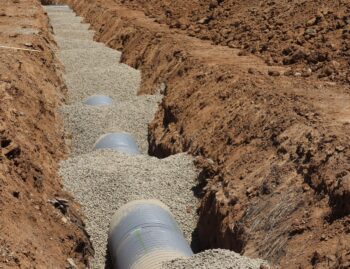
For most Chicago-area beds the strongest default is shredded hardwood or arborist wood chips. University of Illinois Extension states plainly that "research shows that arborist's wood chips provide more benefits with fewer drawbacks than other mulch choices," and Fixr describes shredded hardwood as dense enough to hold a slope without migrating. Cedar and cypress cost more and last longer, dyed mulch buys color rather than performance, and rubber and stone last longest but carry documented drawbacks around plants. Depth matters more than brand: 2 to 3 inches in beds, 3 to 4 inches under trees, never against a trunk.

Which mulch suits a bed depends on what it has to survive: sun, slope, foot traffic, pets and a winter that freezes and thaws. Each material is compared below using published guidance from University of Illinois Extension, The Morton Arboretum, HomeGuide, Fixr, Angi and HomeAdvisor. Our mulch installation page covers the service; this one is about choosing the material.
Mulch Types Compared for Chicago Beds
Costs are per cubic yard, materials only unless noted. Sources: Fixr, HomeAdvisor, Angi, HomeGuide, Morton Arboretum, Illinois Extension.
| Mulch type | Cost tier | Longevity | Color behavior | Wind and slope |
|---|---|---|---|---|
| Shredded hardwood | $40 to $60 | May last a full year | Most woods turn gray after a while | Dense; holds a slope without migrating |
| Pine bark / wood chips | $30 to $110 | Replenish as it breaks down | Holds color longer than most woods | Lighter pieces migrate in runoff |
| Cedar | $100 to $110 | Dense; does not break down quickly | Rich red-brown, golden in some lots | Does not migrate much |
| Cypress | $115 (average) | Years, but sources disagree | Eventually turns gray-tan | Easy to maintain |
| Dyed mulch | $10 to $30 add-on | Dark colors may break down faster | The reason to buy it; fades over time | Same as its base wood |
| Rubber | $80 to $160 | Slow, but not permanent | Painted coating fades | Does not migrate much |
| Stone and gravel | $25 to $180 | Weathers slowly; long-lasting | Does not discolor | Does not wash away in high winds |
| Leaf mulch and compost | Free to $100 | Compost may not last a season | Dark, uniform, informal | Fine texture packs down |
How each performs once down. Cells are from Illinois Extension unless another source is named.
| Mulch type | Weed suppression | Moisture | Soil and pH effect | Kids and pets |
|---|---|---|---|---|
| Shredded hardwood and wood chips | Reduces weed germination | Chips hold water better than bark | Adds nutrients; raises soil pH (Fixr) | No specific caution published |
| Pine bark | Good at adequate depth | Holds less water than chips | Adds organic matter as it breaks down | No specific caution published |
| Cedar and cypress | Good at adequate depth | Coarse texture allows air and water exchange | Adds organic matter as it breaks down | Cedar repels bugs (Fixr) |
| Rubber | Less effective than organic mulches | Does not moderate soil moisture | Releases heavy metals; high soil zinc | Cushions playground impacts; hard to extinguish once lit |
| Stone and gravel | Short-term only; weed seeds blow in | Does not moderate soil moisture | Adds no organic matter | Hard underfoot |
| Leaf mulch and compost | Deep layers control weeds | Fine texture cuts gas and water exchange | Oak leaves raise acidity (Fixr) | Cocoa hull can poison dogs (Fixr) |
Shredded Hardwood and Wood Chips: The Default Choice
Illinois Extension's verdict is unusually direct: arborist's wood chips provide more benefits with fewer drawbacks than other choices, and their wide availability makes them cost-effective. Extension also notes chips, bark and nutshells are coarse enough for good air and water exchange, and that chips retain water better than bark.
Shredded hardwood is the processed cousin of the same material and the most common choice on Chicago-area beds. Fixr prices it at $40 to $60 per cubic yard and recommends it for slopes, because double-shredded pieces knit together instead of floating off. Morton Arboretum agrees on longevity: hardwood chips may last a full year, while finely ground compost and cocoa bean shells may not last a growing season. For these materials priced with delivery, see our guide to mulch installation cost in Chicago.
Cedar, Cypress and Pine Bark
Cedar is the premium aromatic option. Fixr prices it at $100 to $110 per cubic yard, calls it dense enough not to break down quickly or migrate, and rates it an excellent bug repellent; HomeGuide lists cedar among termite-resistant mulches with cypress, gravel and rocks. Worth flagging: Fixr's own FAQ calls cedar bark "one of the poorest choices" with "a reputation for harming plants." That contradiction sits inside one source, so treat cedar as a look-and-scent choice.
Cypress averages $115 per cubic yard (HomeAdvisor). Illinois Extension notes it stays intact for years but eventually turns gray-tan, while Fixr says it breaks down faster in certain climates. Sources disagree, so check depth annually.
Pine bark is the value pick at $30 to $40 per cubic yard (Fixr), and it holds color longer than most woods, which turn gray. Its weakness is weight: bark is lighter than hardwood, better on flat ground than slopes, and "can be washed away quite easily" where water runs off.
Dyed Mulch: Color Retention and Safety
Dyed mulch is priced as an upgrade: Angi lists specialty mulch, including dyed and rubber blends, as a $10 to $30 per cubic yard add-on, and HomeGuide confirms dyed products cost more while flagging a trade — darker colors absorb more heat and break down faster.
On safety, Fixr is specific. Red dyed with iron oxide and black dyed with carbon are "deemed safe to use in the garden," as are vegetable-based dyes. The risk is the wood underneath: some colored products use recycled material, and Fixr warns chromium, copper, arsenic, aluminum and lead should not be recycled into mulch. Look for the Mulch and Soil Council logo, which indicates the product is free of chromated copper arsenate; without it, wear gloves and keep children and pets off the area. For color without dye, Fixr points to naturally colored redwood and cedar bark.
Rubber and Stone Mulch: What the Research Says
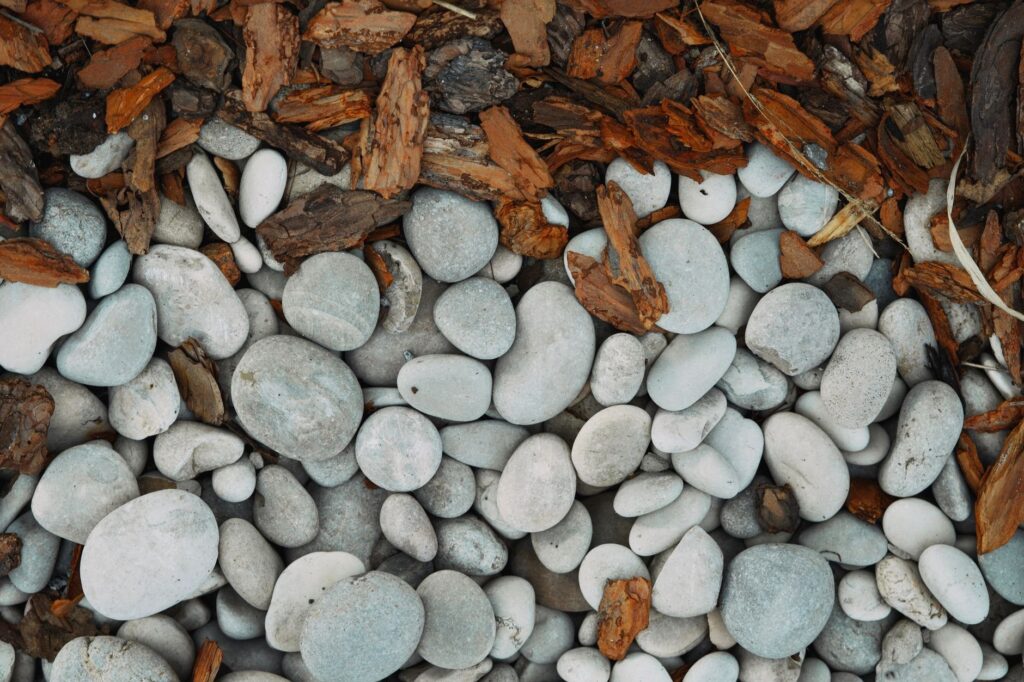
Rubber mulch is the most oversold material in the category, and Illinois Extension has published the case against it around plants. Summarizing Washington State University research, Extension reports that rubber controls weeds less effectively than organic mulches; that studies found leaf yellowing, reduced tree growth and increased tree mortality, with soil zinc high enough to be toxic; that the Asian cockroach prefers it; that once ignited it is the hardest mulch to extinguish; and that it is not permanent, since bacteria feed on rubber and breakdown releases heavy metals. A separate Extension post is blunter: rock and rubber are not recommended around plants because they do not moderate soil temperature or moisture and add no organic matter.
Rubber does have a real use: Extension notes it is common on playgrounds "for good reason," since it cushions impacts exceptionally well.
Stone and gravel are a different trade. Extension notes inorganic mulches weather slowly and that rock mulch does not raise soil temperatures in summer. The catch is weeds: deep stone controls them short-term only, because weed seeds and soil blow in and are then hard to control without herbicides. Fixr adds the upside for exposed sites: stone does not discolor, disintegrate or wash away in high winds.
Leaf Mulch, Compost and Free Municipal Wood Chips
Fallen leaves are the least expensive mulch there is, and Morton Arboretum notes mulch may be available at no cost from municipalities. The City of Chicago's Bureau of Forestry does exactly that: woody debris it removes is 100% recycled into mulch, offered free to residents on a limited basis for pickup between 6:30 a.m. and 2 p.m. Monday through Friday at 9909 West Foster, 2342 South Ashland Avenue and 900 East 103rd Street. Bring a shovel and containers.
Two cautions. Fixr notes oak leaves are highly acidic as they break down, so shredded oak belongs where you want added acidity. Extension notes sawdust and compost control weeds in deep layers but their fine texture reduces gas and water exchange. Fixr treats garden compost, at $75 to $100 per cubic yard, as more of a soil additive than a mulch.
Whichever you use, the bed has to be clean first: old matted mulch, last season's leaves and established weeds come out before new material goes down. That is what our garden cleaning service handles ahead of a mulch job.
What Chicago Freeze-Thaw Changes
On beds across Skokie, Evanston and the North Shore, mulch earns most of its value over winter. Illinois Extension calls it "nature's insulating blanket," keeping soil temperatures more consistent in winter and cooler in summer, and notes it improves soil aeration, structure and drainage over time.
Timing is what most people get wrong. Morton Arboretum advises against mulching in spring until the soil warms and excess moisture has drained, because mulching cold, wet soil keeps it cold and wet. In fall, wait until the soil cools, and do not treat a single frost as the signal.
On beds that drain slowly, texture matters more than material. Morton Arboretum recommends medium-textured mulch: fine products pack down and trap moisture instead of letting it reach roots, while very coarse materials float out into lawns and driveways. Illinois Extension adds the consequences of getting it wrong — deep mulch causes excess root-zone moisture and root rot, thick layers of fine mulch mat and block water and air, building insect and disease problems, and waterlogged mulch turns anaerobic and gives off odors.
Mulching Around Trees: Depth, the Donut and Volcano Mulching
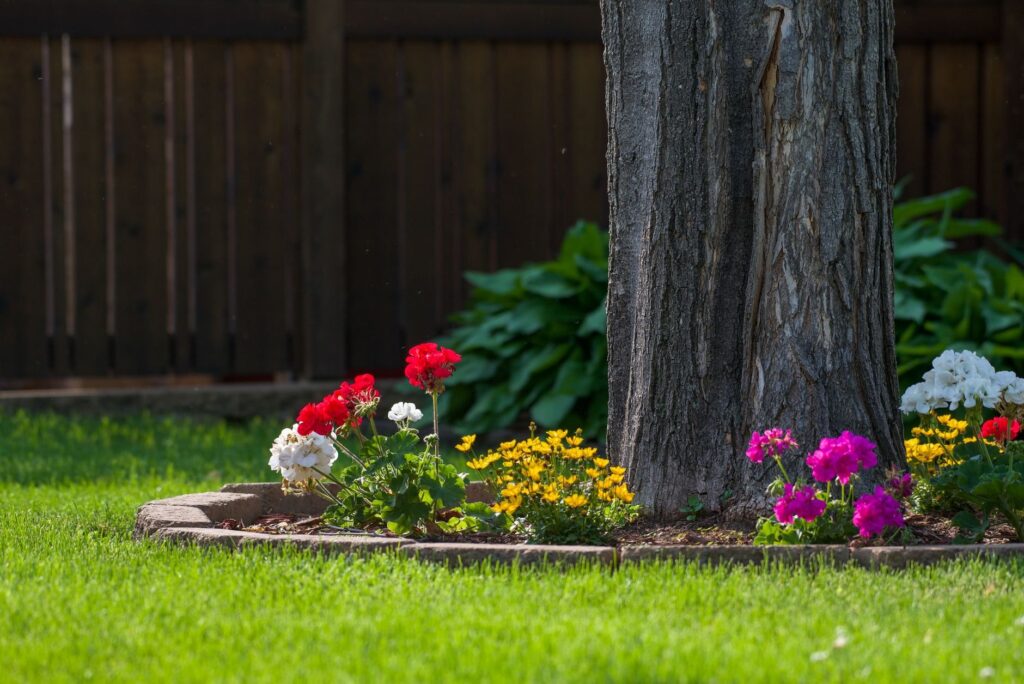
Morton Arboretum is specific for trees and shrubs: spread mulch 3 to 4 inches deep for medium-to-coarse materials, with perennial beds needing only a couple of inches, and pull mulch away from the trunk into a donut hole. Ideally the mulched area reaches the drip line on a younger tree and covers at least a four-to-five-foot diameter on an older one. Check depth annually. Fixr's version: keep mulch 6 to 12 inches off a woody plant's base.
Piling mulch against a trunk is volcano mulching, which Illinois Extension describes as a slow kill homeowners rarely connect to a decline years later. Bark works in air and light; piling mulch on it brings dark and moisture, the bark rots, and rotted bark cannot protect the tree. Extension lists three more mechanisms: heavy mulch deprives roots of oxygen and stops soil drying out; decomposing mulch produces heat that can kill the inner bark of young trees; and mulch on the trunk promotes secondary roots that encircle and choke the main roots, a particular risk for shallow-rooted species such as maples.
How Deep to Mulch and How Often to Refresh
Illinois Extension's baseline for beds is 2 to 3 inches, noting mulch looks deeper when applied but settles. HomeGuide puts most beds at 2 to 4 inches and 1 to 2 inches for fine material. Extension's wood-chip guidance goes coarser: 2 to 4 inches for shredded hardwood and cypress, 4 to 6 inches for chips, always leaving a gap at the plant base.
On refresh, Angi says mulch needs replenishing annually or every other year, typically one to two inches a season. Extension names the common failure: people prefer the look of new mulch and top-dress annually without considering the depth already there. Measure before you order.
Does Mulch Attract Termites?
Partly, and the answer is about moisture rather than wood. HomeGuide states some wood mulches can attract and shelter termites, and suggests a termite-resistant material such as cedar, cypress, gravel or rock, thin layers rather than high piles, well-drained beds, and watching for mud tubes.
Illinois Extension points at the same variable from the house side: termites need constant moisture, so dark, wet areas make an ideal route indoors. Its recommendation, attributed to retired Extension entomologist Phil Nixon, is a 12-to-18-inch bare dirt band around the foundation as the best defense against most insects seeking shelter, with exposed concrete so mud tubes are easy to spot. In practice: mulch the beds and keep mulch off the foundation.
Choosing Mulch in Chicago: FAQ
What is the best mulch for Chicago landscaping?
Shredded hardwood or arborist wood chips for most beds. University of Illinois Extension states that research shows arborist's wood chips provide more benefits with fewer drawbacks than other mulch choices. Fixr recommends shredded hardwood for slopes because it holds without migrating. Cedar and cypress are upgrades for scent and color.
How deep should mulch be?
University of Illinois Extension recommends 2 to 3 inches in beds, noting mulch settles after application. HomeGuide puts most beds at 2 to 4 inches, and 1 to 2 inches for fine material. Under trees and shrubs, Morton Arboretum recommends 3 to 4 inches of medium-to-coarse material.
Is dyed mulch safe for plants and pets?
Fixr states that red mulch dyed with iron oxide and black dyed with carbon are deemed safe in the garden, as are vegetable-based dyes. The concern is the recycled wood some colored products use, since chromium, copper, arsenic and lead should not end up in mulch. Fixr suggests looking for the Mulch and Soil Council logo.
Is rubber mulch a good idea around plants?
Illinois Extension's review of the research says no for planted beds. It reports that rubber controls weeds less effectively than organic mulch, and that studies found leaf yellowing, reduced tree growth and increased tree mortality with high soil zinc. Extension does credit rubber on playgrounds, where it cushions impacts exceptionally well.
Can I use fallen leaves as mulch?
Yes, and Morton Arboretum notes mulch may be available at no cost from municipalities. The City of Chicago Bureau of Forestry recycles removed trees into mulch and offers it free to residents on a limited basis, 6:30 a.m. to 2 p.m. Monday through Friday. One caution from Fixr: oak leaves are highly acidic as they break down.
What is volcano mulching and why is it bad?
Volcano mulching is piling mulch against a tree trunk instead of pulling it back into a donut shape. Morton Arboretum warns that excessive mulch on the trunk builds moisture and creates ideal conditions for insect pests, diseases and decay. Illinois Extension adds that it deprives roots of oxygen and encourages roots that choke the tree.
When should mulch be applied in the Chicago area?
Morton Arboretum advises waiting in spring until the soil begins to warm and excess moisture has drained, since mulching cold, wet soil keeps it cold and wet and slows growth. In fall, wait until the soil cools, and do not treat one frost as the signal.
Get Help Choosing and Installing Mulch
The right material depends on the bed: whether it sits on a slope, how much sun it takes, whether pets and children use it, and how much of last season's mulch is still there. R & G Almanza Landscape Inc is a family-owned, insured crew that has worked on Chicago-area landscapes since 1999, from Skokie and Evanston through the North Shore and the greater Chicago area. Contact us to request an estimate.
Call R & G Almanza Landscape at (847) 869-8584 to plan your mulch for the season.