For a Chicago-area yard, cedar is the value privacy choice at $35 to $40 per linear foot installed, with a service life of 15 to 20 years for plain cedar and 25 years or more for Western red cedar. Vinyl costs more up front at $30 to $60 per linear foot and asks almost nothing of you afterward, but it goes brittle in extreme cold. Aluminum, at $25 to $75 per linear foot, is an ornamental and pool-surround material rather than a privacy one. Those are 2026 installed figures from HomeGuide.
Cost alone will not pick your material, though, because a fence here has to survive about a hundred freeze-thaw cycles a decade, a 42-inch frost line, and lake wind off an open corner lot. Below is how cedar, vinyl, aluminum and composite actually behave in this climate, and which one fits which yard. If you already know the material you want and just need the work done, our fence installation page covers the cedar side of that.
Cedar, Vinyl, Aluminum and Composite at a Glance
All figures below are published 2026 market data from HomeGuide, for installed fencing rather than materials alone.
| Cedar | Vinyl (PVC) | Aluminum | Composite | |
|---|---|---|---|---|
| Installed cost per linear foot | $25 to $40 ($45 to $90 Western red) | $30 to $60 | $25 to $75 | $55 to $85 privacy |
| Service life | 15 to 20 years plain; 25 years or more Western red | 20 to 30 years; over 40 well maintained | 20 to 50 years (metal fencing) | 25 to 30 years or more |
| Winter and wind behavior | Moves with moisture; boards can warp or cup if unsealed | Cracks on impact or with extreme temperature swings; sways in high wind | Rigid, rust-resistant, minimal wind load because it is open | Stronger than vinyl; resists rot |
| Maintenance | Reseal every 1 to 2 years | Wash off mold and mildew; no resealing | Clean periodically, treat rust spots on non-aluminum metal | No sealing required |
| Privacy | Full, in privacy styles | Full, in privacy panels | None; open pickets by design | Full, in panels |
| Look | Natural wood grain, weathers to gray | Uniform color; wood-grain finishes available | Ornamental, black or powder-coated | Wood-grain texture without the wood |
| Pets | Good, solid to grade | Good, solid to grade | Good for medium and large dogs; small dogs may fit through pickets | Good, solid to grade |
| Resale | Curb appeal, but not a value increase on its own | Angi puts return on investment near 30 to 40 percent | Adds security and a finished look | Low-maintenance selling point |
For reference, HomeGuide prices the other common options at $10 to $40 per linear foot for chain link, $20 to $80 for steel, and $50 to $85 for wrought iron.
Cedar: Grades, Knots and What Treatment Actually Does
Cedar is the default wood on Chicago-area residential fencing for a straightforward reason: it resists decay, rot and insects such as termites on its own, without pressure treatment, and it is dense enough to resist warping and cracking.
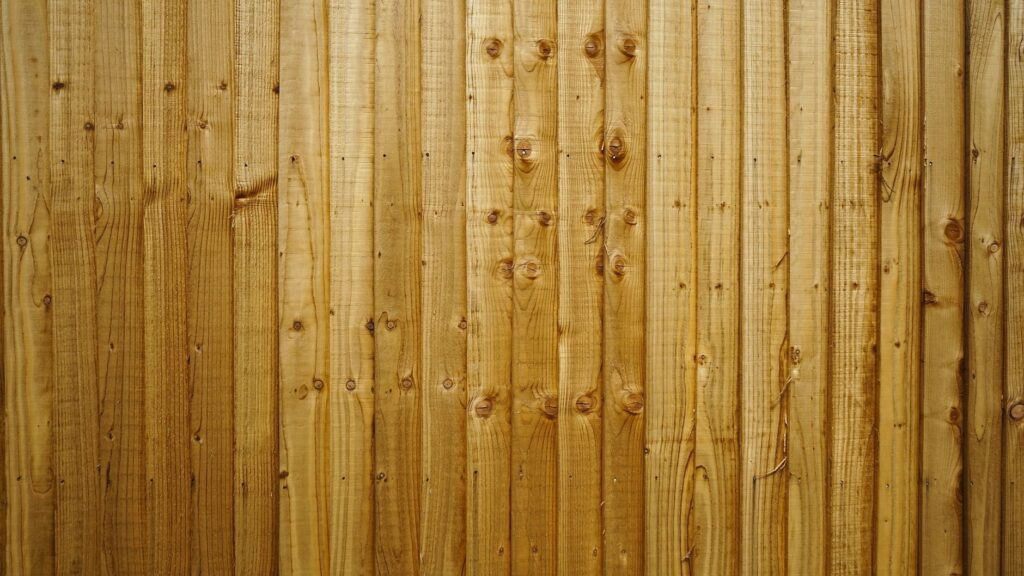
Western red versus plain cedar
The grade decision is the one that actually changes your fence. HomeGuide prices a standard cedar privacy fence at $35 to $40 per linear foot installed and a Western red cedar privacy fence at $45 to $90 per linear foot for high-quality grade boards without knots. Service life moves with it: plain white cedar lasts 15 to 20 years, Western red cedar 25 years or more, and Western red resists water damage and pests better than plain cedar. HomeGuide also notes that some lower-quality Western red cedar pickets cost the same as Eastern white cedar, so grade, not species name, is what you are paying for.
Knots themselves are not a defect in cedar fencing. Cedar boards have knot holes, but they are very unlikely to fall out, which is why knot-free stock is a premium look rather than a structural necessity.
Stain, seal, or let it go gray
Cedar can go up bare. Left alone, its light brown color fades under sunlight and UV exposure and turns gray within a few months. Plenty of homeowners want exactly that.
If you want to hold the color, an oil-based semi-transparent stain is the usual pick, because it reflects UV rays and penetrates the wood. Water-based stains and finishes create a surface film that eventually flakes and peels; an oil-based stain does not. HomeGuide puts staining or painting at $2 to $14 per linear foot, says wood fences generally want resealing every one to two years, and identifies failure to seal against water damage as the most common cause of wood fence failure.
Two details separate a cedar fence that ages well from one that does not. Galvanized stainless steel nails should be used rather than regular nails, which rust and leave streaks down the boards below every fastener. And a top cap over the board ends keeps water out of the end grain, which is where rot starts.
Vinyl in a Freeze-Thaw Climate
Vinyl's pitch is maintenance, and it is a real one. HomeGuide puts vinyl at $30 to $60 per linear foot installed, $40 to $85 for a privacy fence, and $30 to $45 for picket, and notes it does not need resealing every one to two years the way wood does. A vinyl fence lasts 20 to 30 years on average, and well-maintained PVC can last more than 40.
The climate caveats are also real, and HomeGuide lists them plainly among vinyl's drawbacks: it cracks on impact or with extreme temperature changes, it sways in high wind, colors fade over time, and it stains from mold and mildew, with dirt more visible on vinyl than on wood. In a market that swings from below zero in January to the nineties in July, the temperature-change item is the one to weigh.
Panel thickness is where that risk is won or lost. Angi notes that residential vinyl fences run 0.135 to 0.150 inches thick and that thinner panels do not always last as long and might not survive strong winds. If you are comparing vinyl bids, compare wall thickness, not just the per-foot price. Angi's state-level data puts vinyl installation in Illinois at $25 to $50 per linear foot.
One more practical point: painting vinyl is generally a bad idea. Paint does not adhere well to vinyl and can damage the surface, so the color you buy is the color you keep. HomeGuide prices vinyl by color as well, with white at $20 to $25 per linear foot in materials against $30 to $65 for black and $30 to $55 for wood-grain brown.
Aluminum for Pool Surrounds and Ornamental Runs
Aluminum is a different job entirely. HomeGuide prices it at $25 to $75 per linear foot installed, calls it low maintenance and rust-resistant, and notes it works well for pool borders, while pointing out that it does not offer the strength of steel. It is an open-picket, see-through material: it marks a boundary, contains a dog, and encloses a pool without walling off the yard.
That makes aluminum the practical answer in three situations here. Around a pool, where villages require an enclosure and you still want to see the water. Along a front or corner-side yard, where most local codes cap height and require the fence to be substantially open anyway. And on a lot where blocking a view would cost you more than the fence is worth.
Metal fencing as a category lasts 20 to 50 years depending on the material, how well the posts were installed and how often it is maintained. Aluminum is the branch of that category that does not rust, which is why it outperforms steel and wrought iron in a wet, salted Chicago winter without annual attention.
Composite: The Middle Option
Composite fencing is worth a mention rather than a chapter. HomeGuide puts a composite privacy fence at $55 to $85 per linear foot installed, the highest of the four materials here, and describes it as recycled plastic and wood fibers, stronger than vinyl, with a real wood-grain texture. Well-maintained composite fences last 25 to 30 years or more, resist rot, and do not require sealing.
The trade is straightforward: you pay a cedar-plus premium to get a wood look without the resealing cycle. In this market it is a niche choice, usually made by homeowners who already have composite elsewhere on the property and want the fence to match.
Wind, Frost and the Two Local Rules That Apply to Every Material
Whatever material you choose, two Chicago-area constraints apply to all of them, and both are code, not opinion.
Wind. Under the City of Chicago's fence permit terms, a fence must be designed and built to withstand a horizontal wind pressure of at least 30 pounds per square foot from any direction. A solid privacy fence catches all of that; an open aluminum picket fence catches very little. This is why a six-foot solid fence on an exposed corner lot needs posts and footings that a four-foot picket fence does not.
Frost. The Chicago Building Code requires that foundations and other permanent supports of buildings and structures be protected from frost by extending at least 42 inches below final grade. That applies whether the post is cedar, steel-reinforced vinyl, or aluminum. National cost guides assume shallower setting — HomeGuide's baseline treats two-foot cement anchoring as the upgrade — which is one reason a Chicago-area quote runs above a national average, and why post depth is the first question to ask any bidder.
Both rules bite hardest on the materials that block the most wind, which in practice means cedar and vinyl privacy fences.
Which Material Should You Pick?

- You want a private back yard on a normal budget. Cedar. It is the lowest-cost route to a solid six-foot fence, it looks like wood because it is wood, and the maintenance is a weekend of stain every year or two.
- You want privacy and refuse to maintain anything. Vinyl, in the thickest panel you can get, and accept that a hard impact in February can crack a panel.
- You have a pool, or a front yard that has to stay open. Aluminum. It satisfies enclosure requirements without turning the yard into a box, and it does not rust.
- You have dogs. Any solid material works. With open pickets, check the spacing against your smallest dog, and note that a split-rail fence contains large animals only and needs added wire mesh to hold a dog in a yard.
- You are selling within two years. Weigh it carefully. Angi puts a well-maintained vinyl fence's return on investment near 30 to 40 percent and notes that a cedar fence on its own does not raise a home's value, though both help curb appeal. A neglected fence of any material can pull value down.
R & G Almanza Landscape Inc installs cedar fencing: picket, and privacy styles including board-on-board, stockade, board and batten, scalloped, pointed top, Nantucket and French gothic, plus paddock and estate fencing and wood fence repair. If you are set on vinyl, aluminum or composite, ask us when you call and we will tell you straight whether it is a job for us. Either way, the sizing work is the same, and it starts with what a cedar fence costs per linear foot in this market.
Fence Material FAQ
Is cedar or vinyl better for a Chicago yard?
Cedar costs less up front, at $35 to $40 per linear foot installed for a privacy fence against $40 to $85 for vinyl privacy (HomeGuide). Vinyl needs no resealing and lasts 20 to 30 years against 15 to 20 for plain cedar. The Chicago-specific catch is that HomeGuide lists cracking with extreme temperature changes among vinyl's drawbacks, which is a real consideration in a climate that swings from below zero to the nineties.
How long does each fence material last?
HomeGuide puts plain white cedar at 15 to 20 years, Western red cedar at 25 years or more, vinyl at 20 to 30 years with well-maintained PVC lasting over 40, metal fencing including aluminum at 20 to 50 years, and composite at 25 to 30 years or more. For wood generally the range is 15 to 50 years or more, and the single biggest variable is whether the wood was sealed against water.
Does vinyl fencing crack in Chicago winters?
It can. HomeGuide lists cracking on impact or with extreme temperature changes among vinyl's disadvantages, along with swaying in high wind. Panel thickness is the main defense: Angi notes residential vinyl runs 0.135 to 0.150 inches thick and that thinner panels do not always last as long and might not survive strong winds. Compare wall thickness between bids, not just price per foot.
Is aluminum fencing good for a pool?
Yes, and it is one of the material's main uses. HomeGuide describes aluminum as low maintenance, rust-resistant and well suited to pool borders. Because it is an open-picket material, it satisfies a pool enclosure requirement while keeping the water visible from the house. Confirm the required barrier height and gate hardware with your village before you order, since those rules are set locally.
Which fence material needs the least maintenance?
Vinyl and composite. HomeGuide notes vinyl does not need the resealing every one to two years that wood does, and that composite is rot-resistant and requires no sealing. Aluminum is close behind, since it does not rust. Cedar is the highest-maintenance option of the four, though "maintenance" here means a stain coat every year or two, not constant repair.
Which fence material is best for dogs?
Any solid-to-grade material — cedar, vinyl or composite — contains a dog reliably. With open materials, spacing decides it: HomeGuide notes that a split-rail fence provides no privacy and contains only large livestock, and that added wire mesh is necessary to hold pets in a yard. Aluminum picket spacing works for medium and large dogs; measure it against a small one.
Does a new fence add resale value?
Partly. Angi puts a well-maintained vinyl fence's return on investment at about 30 to 40 percent and notes that a poorly maintained fence can lower home value because it affects the whole property's appearance. On cedar, Angi is more measured: a cedar fence boosts curb appeal, privacy and the look of a yard, but on its own it does not raise a home's value. HomeGuide says a metal fence can enhance property value by adding security and a finished look.
Does R & G Almanza install vinyl or aluminum fencing?
R & G Almanza Landscape Inc installs cedar fencing, in picket and privacy styles including board-on-board, stockade, board and batten, scalloped, pointed top, Nantucket and French gothic, plus paddock and estate fencing and wood fence repair. For vinyl, aluminum or composite, ask when you call and we will tell you whether your project is one we take on.
Talk Through Materials for Your Chicago-Area Yard
Material choice is easier to settle in front of the actual yard, where the slope, the property line, the neighbor's fence and the wind exposure are all visible at once. R & G Almanza Landscape Inc is a family-owned, insured crew working across Skokie, Evanston, Chicago and the North Shore since 1999. One thing to settle before you order anything: check the height and permit rules in your town, because they can rule out a material or a height before cost ever enters the conversation. Contact us to request an estimate.
Call R & G Almanza Landscape at (847) 869-8584 to talk through fencing materials for your property.