For a Chicago-area driveway, concrete is the middle-cost, long-life default, pavers cost the most and last the longest, and asphalt is the lowest-cost to install but needs resealing every few years. HomeGuide's 2026 figures put asphalt at $5 to $12 or more per square foot, concrete at $6 to $15, and pavers at $10 to $30 installed, with service lives of 15 to 30, 30 to 40, and 25 to 75 years in the same order. In a freeze-thaw climate, the base under the surface decides the outcome as much as the material on top.
That last point is where most comparisons stop short. National cost guides treat every yard the same, and the ground under Skokie, Evanston, and the North Shore is not: it is dense clay that holds water, and it freezes and thaws repeatedly from November through March. This guide compares the three surfaces on the things that actually decide the job here, using published 2026 ranges from HomeGuide, Angi, HomeAdvisor, and Fixr, and finishes with what the City of Chicago and the Illinois Department of Transportation require before a driveway paving project can start.
Pavers, Concrete and Asphalt Side by Side
Here is the whole decision in one table, from 2026 HomeGuide, Angi, and Fixr figures. Every number is a published market range, not a quote for your property.
| Factor | Pavers | Concrete | Asphalt |
|---|---|---|---|
| Installed cost per sq ft | $10 – $30 | $6 – $15 | $5 – $12+ |
| Service life | 25 – 75 years | 30 – 40 years (Angi: 30 – 50) | 15 – 30 years |
| Freeze-thaw behavior | Joints let units move instead of cracking | Cracks in cold; freeze-thaw accelerates wear | Less porous, less likely to crack when frozen |
| Road salt and de-icers | Unaffected by rock salt and de-icers | Salt can damage the finish; a sealer protects it | Rock salt can damage the surface |
| Repairability | One cracked unit swaps out individually | Patches are hard to color-match, so repairs show | Simplest to repair; patches blend in |
| Permeable version | Permeable pavers $8 – $30 | Pervious concrete $8 – $16, drains fastest | Porous asphalt $7 – $13 |
| Resale and looks | 69% return on investment | Adds 5% to 10% to property value | Always black; no finish options |
| Routine maintenance | Joint sand top-ups, weeding; optional sealing every 3 – 5 years | Sealing optional, advised every 2 – 3 years | Reseal every 2 – 3 years, resurface every 3 – 5 |
| Time before you can drive on it | Immediately | 7 to 10 days | 48 to 72 hours |

What Each Driveway Material Costs Installed in 2026
Every guide prices driveways by the square foot, then multiplies. The three sources agree on the order and differ on the width of each band.
| Material | HomeGuide | HomeAdvisor | Fixr |
|---|---|---|---|
| Asphalt | $5 – $12+ per sq ft | $7 – $15 per sq ft | $2 – $6 per sq ft |
| Concrete | $6 – $15 per sq ft | $8 – $18 per sq ft | $4 – $10 per sq ft |
| Pavers | $10 – $30 per sq ft | $10 – $50 per sq ft | — |
On whole-project averages, HomeAdvisor puts paving a driveway at $4,905 nationally, normal range $2,523 to $7,292. Angi reports an average asphalt driveway at $5,248, concrete near $6,400, and pavers around $12,000, with most paver projects between $6,000 and $18,000.
Asphalt: the lowest entry price
Asphalt is the least expensive of the three to put down: HomeGuide prices a 400-square-foot asphalt driveway at $2,000 to $4,800 and a 600-square-foot one at $3,000 to $7,200, and Fixr notes concrete costs at least 45 percent more. The trade is real too — Angi has asphalt needing sealant every two to three years and resurfacing every three to five, a recurring cost concrete does not carry.
Concrete: the middle of the market
Concrete sits between the two on price and near the top on service life. HomeGuide puts a two-car concrete driveway of about 576 square feet at $3,500 to $8,600, with decorative colors, borders, and stamped patterns at $10 to $25 per square foot. Stamped concrete is why the band is so wide: the same slab, finished to imitate brick or stone, can cost double a plain broom finish.
Pavers: highest upfront, simplest repairs
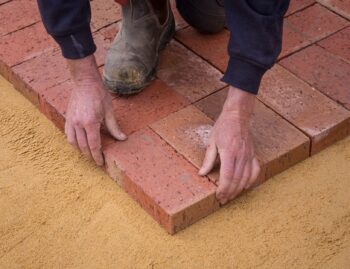
Pavers are the premium option, and the cost is mostly labor: each unit is cut and set by hand. HomeGuide prices a 24-by-24-foot paver driveway at $5,700 to $17,200, splitting the per-square-foot cost into $2 to $17 for pavers, $2 to $3 for base, and $6 to $10 for labor. Replacing a concrete driveway with pavers runs $12 to $35 per square foot including demolition.
Lifespan: How Long Each Surface Actually Lasts
Lifespan is where the upfront price gap narrows. HomeGuide's table gives asphalt 15 to 30 years, concrete 30 to 40, and brick or concrete pavers 25 to 75. Angi is more generous to concrete at 30 to 50, and Fixr reports a well-maintained asphalt driveway reaching about 30 years while a concrete one can pass 50. Two things move a driveway inside its band more than the material does:
- The base. HomeGuide specifies 6 to 8 inches of compacted gravel under a residential asphalt driveway with 2 to 3 inches of asphalt on top, and a 4 to 6 inch sub-base under pavers. A thin base is the most common reason a driveway fails early, whatever sits on it.
- Maintenance actually done. Fixr notes an unsealed asphalt driveway can be unsightly and possibly unusable after only five years, against about 30 with upkeep — a six-fold swing from maintenance alone.
Winter Performance: Freeze-Thaw, Frost Heave and Road Salt
This is the part national cost guides treat as a footnote and the part that decides a Chicago driveway. Water in soil expands as it freezes and lifts whatever sits on it — frost heave. Fixr states plainly that intense cold can cause frost heave and result in driveway cracking and other damage.
Cracking in the cold
Asphalt wins this one. Angi's comparison says asphalt is less porous, so water does not soak in and freeze, and that it is more flexible than concrete, adapting better to changes in soil pressure. Angi names the exact local condition: with clayey soil that expands and contracts with moisture, asphalt will likely stand up better. Concrete is listed as cracking in cold, with freeze-thaw cycles accelerating deterioration.
Pavers sidestep the problem a third way. A paver driveway is thousands of separate units with sand joints, and HomeGuide notes they are less likely to chip or crack because the joint space allows movement during freeze-thaw cycles. The flip side, same page: if water reaches the sub-grade and freezes, the whole field can shift — a base and drainage failure, not a material one.
What de-icers do to each surface
The three react very differently to a Chicago winter.
- Pavers: HomeGuide lists them as unaffected by rock salt and de-icing chemicals.
- Concrete: Fixr lists damage by salt and de-icers as a con. HomeGuide's answer is a sealer, which it says protects against de-icing chemicals, applied after a 28 to 30 day cure and reapplied every two to three years.
- Asphalt: HomeGuide warns that rock salt can damage asphalt, particularly newer installations, and recommends calcium magnesium acetate, calcium chloride, or plain sand instead.
Snow removal and plow wear
Fixr notes ice is easier to remove from asphalt than from concrete. Pavers are the hardest to clear: HomeGuide lists "harder to clear snow due to the rough surface" as a paver disadvantage, and a plow blade dropped flat on a paver field can catch and displace units. A rubber or poly cutting edge, or a blade raised about an inch, avoids that.
Chicago Ground Rules: Clay Subgrade, Base Depth and Drainage

Much of the North Shore sits on dense clay, which holds water rather than draining it, and saturated clay feeds frost heave. HomeGuide's asphalt guide flags it directly: clay soils often need extra excavation and base material to prevent future cracking and settling.
That preparation is a budget line, not an upsell. HomeGuide prices grading and site prep at $5 to $8 per square foot, excavation at $1 to $5, and a new drainage system along the driveway at $400 to $2,400; HomeAdvisor puts drainage work at $1,500 to $5,000. Rebar or wire mesh in a concrete pour adds $1 to $3 per square foot and, HomeGuide notes, significantly improves crack resistance in freeze-thaw climates.
Permeable and pervious options
To stop water pooling on or beside the driveway, a permeable surface moves it down instead of across. HomeGuide prices permeable pavers at $8 to $30 per square foot, porous asphalt at $7 to $13, and pervious concrete at $8 to $16, noting pervious concrete drains fastest of the three. Angi puts permeable pavers at $15 to $25 per square foot and flags that they need a specific base. They also need more annual weeding and debris clearing out of the joints.
Permits: Chicago's Public-Way Rule and Suburban Village Rules
The pavement between the street and your property line is not yours. The City of Chicago's transportation department states it directly: no person has the right to use the public sidewalk or parkway as a driveway without first obtaining a use of public way permit authorized by the Commissioner of Transportation. A residential applicant must show proof of the owner's liability insurance for $250,000 naming the City of Chicago, its officers, employees or agents as additionally insured; for commercial properties it is $1,000,000. The residential Class A fee, for properties not exceeding four units, is $10 for the life of the ownership with no annual fee, plus a plat of survey, a photograph of the curb cut and sidewalk area, and the property's Permanent Index Number.
If your street is a state route, a second permit applies. IDOT states that under 605 ILCS 5/4-209 it requires a permit for work within the right-of-way of an Interstate, U.S. state route, Illinois state route, or state-maintained roadway, and the permit must be in hand before work starts.
Outside the city limits, every village writes its own rules on driveway width, setbacks, apron construction, and runoff. National figures put a general driveway permit at $50 to $200 (HomeGuide, HomeAdvisor), and HomeGuide adds that most cities require permits for new installations and replacements but not repairs. Those are averages, not your village's number — check with your village before scheduling anything on the apron.
Which Surfaces R & G Almanza Installs
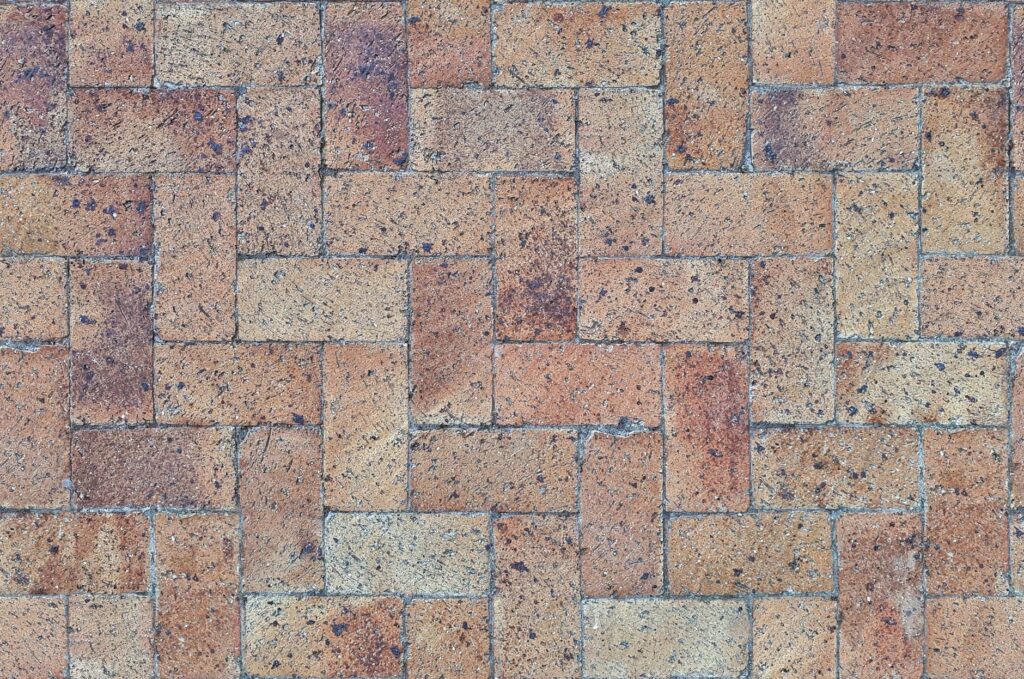
R & G Almanza Landscape Inc installs concrete driveways, stamped concrete, and paver and interlocking paver driveways for homes, rental properties, businesses, and municipal properties across the greater Chicago area. We do not offer asphalt driveway paving. On asphalt we handle upkeep: cleaning and power washing, seal coating, resurfacing, crack repair, edging, and careful snow removal and de-icing.
If your driveway is cracking, sinking, or heaving rather than wearing out, that is a different decision and usually a smaller bill. Our guide to whether to repair, resurface or replace a damaged driveway covers how to read the damage first.
A Short Decision Guide
- Choose pavers for the longest service life, the strongest curb appeal, a surface road salt does not touch, and repairs that swap one unit instead of re-pouring a slab.
- Choose concrete for a long-lived, low-upkeep driveway at a mid-market price, especially with a stamped or exposed-aggregate finish, sealed every few years to keep de-icers off the surface.
- Choose asphalt if the lowest install cost and fastest return to use matter most and you will keep to the resealing schedule. We do not install it, so that is a paving-contractor job.
- Spend on the base before the finish. On clay, a thicker compacted stone base and a drainage plan buy more years than a decorative surface does.
- On resale, HomeGuide gives a paver driveway a 69% return on investment and a well-designed concrete driveway a 5% to 10% property value increase; Angi ranks both above asphalt on curb appeal.
Driveway Material FAQ
Is a paver driveway better than concrete in Chicago?
On winter performance, yes. HomeGuide lists pavers as unaffected by rock salt and de-icers and less likely to crack, because the joints allow movement during freeze-thaw cycles, while concrete is prone to cracking in the same conditions. Concrete wins on upfront cost, $6 to $15 per square foot against $10 to $30. The trade is money now against winter resilience later.
Which driveway material holds up best in freeze-thaw winters?
Asphalt and pavers both handle cold better than concrete, for different reasons. Angi describes asphalt as less porous and more flexible, adapting to soil that expands and contracts; HomeGuide credits paver joints with absorbing the same movement. Concrete is the one most often listed as cracking in cold. Whichever you pick, a compacted base is what keeps frost heave from lifting it.
How much does a paver driveway cost compared with concrete and asphalt?
HomeGuide puts pavers at $10 to $30 per square foot, concrete at $6 to $15, and asphalt at $5 to $12 or more. On whole projects Angi reports an average paver driveway near $12,000, concrete near $6,400, and asphalt at $5,248. Site prep, removal, and drainage move all three.
Can you put rock salt on a paver, concrete or asphalt driveway?
HomeGuide lists pavers as unaffected by rock salt and de-icing chemicals. For asphalt it warns that traditional rock salt can damage the surface and suggests calcium magnesium acetate, calcium chloride, or sand instead. For concrete, Fixr lists salt and de-icer damage as a drawback, and HomeGuide recommends a sealer reapplied every two to three years.
How long does each driveway material last?
HomeGuide's lifespan table gives asphalt 15 to 30 years, concrete 30 to 40, and brick or concrete pavers 25 to 75; Angi puts concrete at 30 to 50. The spread inside each comes down to base depth, drainage, and whether the sealing and crack-filling schedule is kept.
Do I need a permit to replace a driveway in the Chicago area?
In Chicago, yes for the public-way portion: CDOT states no person has the right to use the public sidewalk or parkway as a driveway without a use of public way permit, and residential applicants must show $250,000 of owner's liability insurance naming the city as additionally insured. On a state route, IDOT requires its own right-of-way permit. Suburban rules differ — check with your village.
Planning a New Driveway in Skokie or the North Shore?
The right material depends on the soil under it, how water moves across it, how you clear snow, and how long you plan to stay. R & G Almanza Landscape Inc is a family-owned, insured crew building driveways, patios, and walkways across Skokie, Evanston, Chicago, and the North Shore since 1999. Wondering what your project would cost? Contact us to request an estimate, and we will walk the driveway with you and tell you honestly which surface fits.
Call R & G Almanza Landscape at (847) 869-8584 to talk through a concrete, stamped concrete, or paver driveway.