In Illinois the difference is a matter of title, not of who is allowed to design your yard. The state's Landscape Architecture Registration Act reserves the titles "landscape architect" and "registered landscape architect" for people registered with the Illinois Department of Financial and Professional Regulation, and the very next subsection states that nothing in the Act prevents or restricts an unregistered person from offering, advertising or providing the same services. So the practical question for a Chicago homeowner is scope, not permission: does the project need sealed technical submissions and engineering-grade grading and drainage, or planting, hardscape and outdoor living design?
That distinction gets muddied constantly, partly because national cost guides describe the professions in terms that vary state by state. Below is what the Illinois statute itself says, what each professional typically handles, when a project genuinely calls for sealed drawings, what each costs, and where a design-build contractor sits between the two. Our page for Chicago landscape designers covers the service side; this article is about choosing the right kind of professional for the job.
What Illinois Law Actually Says About the Title
The title is reserved; the work is not
The Illinois Landscape Architecture Registration Act is explicit on both halves of this. Its title section states that no person shall use the title "registered landscape architect" or "landscape architect" without being so registered by the Department. The same section then states that nothing in the Act shall be construed as preventing or restricting the offering, advertising, or providing of services defined as landscape architecture practice by an individual not registered under the Act.
In other words, Illinois protects the name, not the activity. The Act puts real teeth behind the name — holding yourself out as a landscape architect without registration is a Class A misdemeanor under the statute, a Class 4 felony on a later conviction, and carries a civil penalty of up to $10,000 per offense — but it does not make designing a landscape a restricted activity.
What "landscape architecture practice" covers under the Act
The statute defines landscape architectural practice as professional services connected with a landscape architecture project that do not require the seal of an architect, land surveyor, professional engineer, or structural engineer. Those services include preliminary studies, developing design concepts, planning the relationships of physical improvements and intended uses of the site, preparing and filing sketches, drawings, plans and specifications, establishing form and aesthetic elements, developing technical details on the site that are exclusive of any building or structure, preparing and administering technical submissions, and conducting site observation.
Read that carefully and you get a useful boundary in both directions. Landscape architecture is site work, not building work: anything needing a structural engineer's or building architect's seal sits above it, and ordinary planting and hardscape design sits inside a space anyone may work in.
The seal
Registration carries one concrete instrument: a seal. The Act requires every registered landscape architect to hold a reproducible seal bearing their name, registration number and the words "Registered Landscape Architect, State of Illinois." For all plans, specifications or other technical submissions prepared or issued by a registered landscape architect and filed for public record, the Act requires them to affix a signature, the current date, the date their registration expires, and the seal. The Illinois Department of Financial and Professional Regulation lists "Landscape Architect, Registered" among the professions it regulates, and points applicants to its CORE online system, which the agency launched on October 30, 2024.
What Each Professional Typically Does
Beyond the statute, the working split described by national guides is consistent: designers lead with planting and appearance, architects lead with terrain and technical documents.
| Landscape designer | Landscape architect | Source |
|---|---|---|
| Enhancing existing landscapes | Designing new landscapes | Angi |
| Choosing native plants; pollinator and water-element design | Surveying the property; regrading; installing drainage | Angi |
| Seasonal changes and xeriscaping | Designing hardscapes; increasing sustainability | Angi |
| Small to medium residential, single-family homes | Large residential, multi-family, commercial, city buildings, office complexes, public parks | HomeGuide |
| Aesthetics, plant choice, general topography | Structural design, hardscaping, drainage systems, grading and elevation changes | HomeGuide |
| Conceptual designs; ideal for small projects that do not need permits | Highly detailed construction plans with exact dimensions; ideal for jobs requiring city approval and permits | HomeGuide |
Angi puts it in one line: landscape designers focus on aesthetics and plant selection while architects handle structural elements and drainage, and the choice depends on project scope — designers suit garden enhancements and plant-focused updates, architects handle terrain changes, hardscaping and new construction landscaping. Angi also notes that landscape architects hold either a bachelor's or master's degree in landscape architecture, and HomeAdvisor adds that the path includes supervised work experience and a passed national exam.
When a Project Needs Stamped Drawings
This is the question that actually decides the hire, and it has a clean test: does anything get filed for public record, and does anything change how water and elevation behave?

HomeGuide is direct about the residential threshold. It states that landscape designers do not have the qualifications to make detailed construction plans to get permits from the building department, and that a landscape architect or engineer should evaluate plans with new walls and grading changes. It also flags plan review as a cost factor: designs that change yard drainage, electrical work, or involve extensive hardscaping may need an architect's or engineer's approval.
The Illinois Act draws the upper boundary from the other side. Because landscape architectural practice is defined as services that do not require the seal of an architect, land surveyor, professional engineer or structural engineer, a project that does require one of those seals — a structural retaining wall beyond code height, a stormwater detention system, work touching a building — is not a landscape architecture question at all. It is an engineering one.
Municipal review is the third trigger. The Village of Skokie's permit process notes that larger projects may require approval from the Appearance Commission, Plan Commission or Zoning Board of Appeals before a building permit is issued, and that submissions need plans plus a plat of survey. A project heading for a commission review is a project where stamped, dimensioned drawings stop being optional.
For most Skokie, Evanston and North Shore homes, none of those triggers fire. A patio, a walkway, a planting plan, a cedar fence line and a modest retaining wall are handled on drawings a designer or design-build contractor produces and the village reviews as a standard permit.
What Each One Costs
Published ranges put the two closer together than their reputations suggest. These are national cost-guide figures, not quotes.
| Figure | Landscape designer | Landscape architect | Source |
|---|---|---|---|
| Hourly rate | $50 to $150 | $70 to $150 | Angi |
| Hourly rate | $50 to $150 | $100 to $250 minimum | HomeGuide |
| Hourly rate | — | $70 to $140 | HomeAdvisor |
| Typical project total | Average $4,588, normal range $1,934 to $7,268 | Average $2,141, normal range $724 to $3,557 | HomeAdvisor |
| Full span | — | $150 to $8,088 | Angi, HomeAdvisor |
| Fee as a share of project cost | 10% to 20% | 5% to 15%, average about 10% | HomeGuide (designer), Angi (architect) |
| Illinois state average | — | $2,000 | Angi |
Two caveats matter here. First, do not read the architect's lower project average as meaning architects are cheaper — the two HomeAdvisor pages survey different project sets, and HomeAdvisor's architect page states directly that the cost of hiring a landscape architect or a designer is similar. Second, architect percentage fees climb on larger work: HomeAdvisor notes rates of 5% to 15% are common and can reach 25% depending on project type, usually on new construction and additions. HomeGuide adds that architects are more likely to charge percentage fees because they carry liability if plans violate building codes.
Permits sit on top either way: Angi puts landscaping permits at $50 to $450 depending on the project and local law. For the fuller picture of design fees against installation cost, the landscape design process lays out where each cost lands in the sequence.
Where a Design-Build Landscape Contractor Fits
There is a third option that the designer-versus-architect framing tends to hide, and it is the one most residential work in the Chicago area actually runs through.
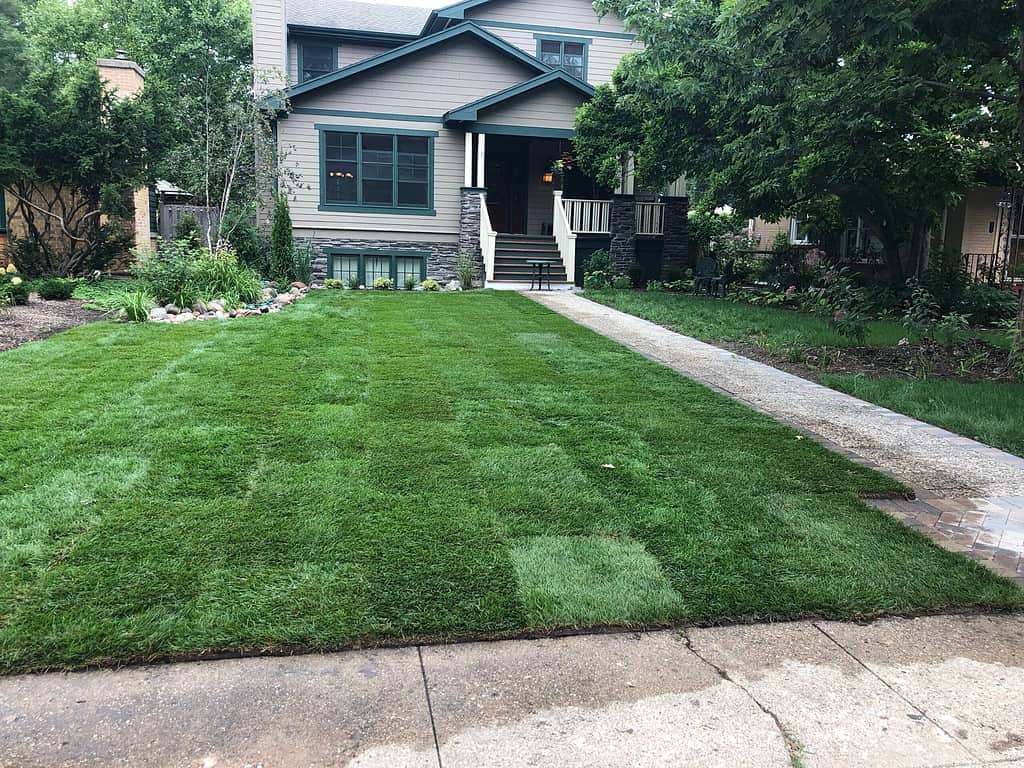
HomeGuide groups the field three ways: professionals who only create conceptual designs, professionals who design and then consult with contractors, and companies that offer design and installation together. That third group is the design-build model, and HomeGuide notes those companies typically deduct the plan fee from the total installation price. Angi's point about the trade-off is worth weighing too: a design-only professional will not carry out the installation and is less likely to coordinate the people who will, which leaves scheduling, sequencing and accountability with you.
The practical advantage of design-build is that the person drawing the patio is the person who has to build it on your grade, in your soil, through a Chicago winter. Constructability is decided at the drawing stage, and that feedback loop closes immediately when both jobs live in one company.
R & G Almanza Landscape Inc works in that model: a family-owned, insured landscape design and installation company based in Skokie, serving Evanston, the North Shore and the greater Chicago area since 1999. Styling questions — materials, planting mood, outdoor living layout — usually come next, and our roundup of landscape design trends is a useful place to gather ideas before a first site visit.
Which Pro for Which Chicago Project
| Your project | Usually the right fit | Why |
|---|---|---|
| New beds, native or pollinator planting, seasonal color | Landscape designer or design-build contractor | Plant-led work, no filings, no elevation change |
| Paver patio, walkway, cedar fence, outdoor living space | Design-build landscape contractor | Standard village permit; constructability decided at drawing stage |
| Modest retaining wall, minor regrading, downspout and drainage tie-in | Design-build contractor; architect or engineer if walls or grade changes are significant | HomeGuide advises an architect or engineer evaluate plans with new walls and grading changes |
| Whole-property redesign on a large or steep lot | Landscape architect, then an installer | Terrain, drainage and survey work sit in the architect's described scope |
| Anything filed for public record or heading to a commission review | Landscape architect | The Illinois Act requires a registered landscape architect's seal on technical submissions filed for public record |
| Structural walls, stormwater detention, work attached to a building | Professional engineer or building architect | The Act defines landscape architecture as work that does not require those seals |
Choosing Between a Designer and an Architect: FAQ
Is "landscape architect" a protected title in Illinois?
Yes. The Illinois Landscape Architecture Registration Act states that no person shall use the title "registered landscape architect" or "landscape architect" without being so registered by the Department. Using the title without registration is a Class A misdemeanor under the Act, a Class 4 felony on a subsequent conviction, with a civil penalty of up to $10,000 per offense.
Can a landscape designer legally design my yard in Illinois?
Yes. The same section of the Act that reserves the title also states that nothing in the Act shall be construed as preventing or restricting the offering, advertising, or providing of services defined as landscape architecture practice by an individual not registered under the Act. Illinois regulates the name, not the act of designing a landscape.
What is the difference between a landscape architect and a landscape designer?
Scope and documents. Angi's split is that designers focus on aesthetics and plant selection while architects handle structural elements and drainage. HomeGuide adds that designers typically work on small to medium residential projects and conceptual designs, while architects produce highly detailed construction plans with exact dimensions for jobs needing city approval and permits.
How much does a landscape architect cost in Illinois?
Angi gives an Illinois state average of $2,000 and, for Arlington Heights, Illinois, a normal range of $724 to $3,557 with an average of $2,141 across a $150 to $8,088 span. Hourly rates run $70 to $150 per Angi, $70 to $140 per HomeAdvisor, and $100 to $250 minimum per HomeGuide. Percentage fees are 5% to 15%, averaging about 10%.
Does a residential backyard project need a landscape architect?
Usually not. HomeGuide describes designers as suited to small projects that do not need permits and architects as suited to jobs requiring city approval, and advises an architect or engineer evaluate plans involving new walls and grading changes. A patio, walkway, fence line and planting plan on a typical North Shore lot falls on the designer and design-build side of that line.
When do landscape plans have to be sealed?
The Illinois Act requires that for all plans, specifications or other technical submissions prepared or issued by a registered landscape architect and filed for public record, the registered landscape architect affix a signature, the current date, the registration expiration date, and a seal. Work requiring an engineer's, surveyor's or building architect's seal falls outside landscape architecture practice entirely under the Act's own definition.
Talk Through Your Chicago Project
The honest version of this comparison is that most homeowners never have to choose: the project decides. If drawings are heading for public record or the grade and drainage have to be engineered, the work belongs with a registered landscape architect or an engineer. If it is a patio, a planting plan, a wall within ordinary residential scale, or a full outdoor living space, the work belongs with a designer who can also build it. R & G Almanza Landscape Inc has designed and installed landscaping across Skokie, Evanston, the North Shore and the greater Chicago area since 1999. Contact us to request an estimate and we will tell you plainly which category your project falls into.
Call R & G Almanza Landscape at (847) 869-8584 to talk through your landscape design and installation project.